Written by Badruddin Saify
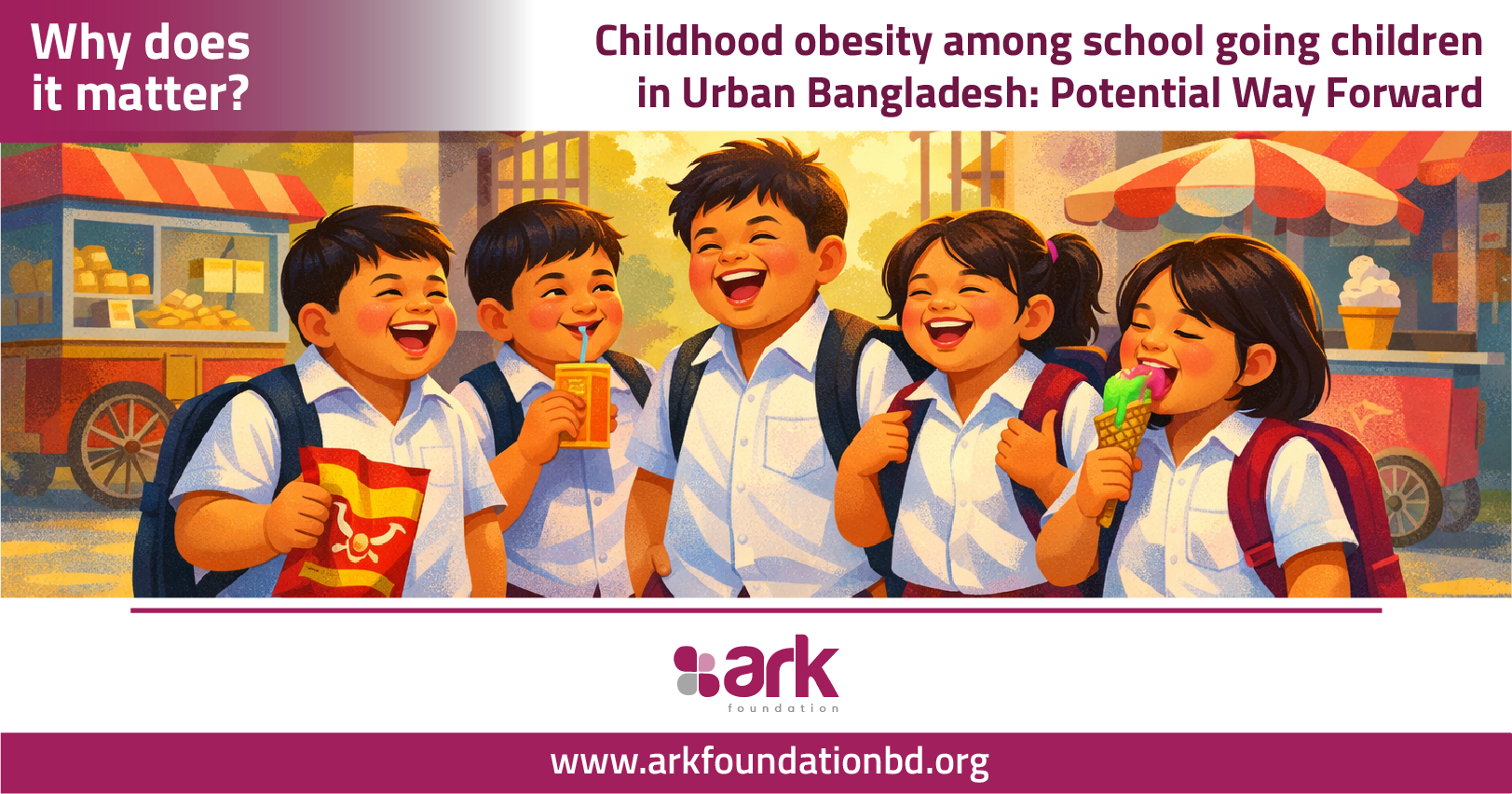
For decades, the image of a chubby child in Bangladesh has served as a profound source of pride, probably a visual rebuttal to the historical specter of famine and chronic undernutrition in the country. In our collective cultural memory, physical weight is frequently synonymized with wealth and wellness. Therefore, many traditional urban households tend to evaluate a child’s health solely through the lens of physical mass. However, this cultural reverence for weight has led to a precarious nutritional transition. By normalizing a tiffin culture of sugar-sweetened beverages and providing allowances for hyper-palatable, high-sodium foods, we have inadvertently cultivated a generation accustomed to the pitfalls of ultra-processed diets. What we are witnessing today in urban Bangladesh is a systemic failure, as the nation now grapples with the Triple Burden of Malnutrition, defined as the paradoxical coexistence of undernutrition, micronutrient deficiencies, and overweight and obesity.
This triple burden is not uncommon. In urban Bangladesh, undernutrition and obesity now coexist within the same communities and even the same households. While one child may be stunted due to a lack of nutrients, another in the same family is being pushed toward obesity by an environment saturated with empty calories and foods laden with salt and sugar. Meanwhile, the country is struggling with the growing burden of non-communicable diseases (NCDs), putting further pressure on an already exhausted health system where the public must spend at least 74 out of every 100 BDT from their own pockets to access healthcare. By culturing and cultivating obesity through our current lifestyle and systems, we are driving yet another nail into the health system’s coffin. Therefore, not only as health-system advocates and public health researchers, but as responsible guardians, parents, and societal gatekeepers; we must first understand the social, cultural and psychological phenomena that surround us and our children. We must recognize the forces pushing them toward obesity and chronic disease. Only then can we explore context-specific, culturally sensitive ways to reverse this trend through a whole-of-society approach.
The Industrialization of the School-Gate
While the Bangladeshi household often provides the cultural context for valuing physical weight, the urban school-gate has now been providing an environment where these traditional views meet modern dietary challenges. Beyond being a simple entry point for education, the school perimeter now plays an influential role in shaping a child’s nutritional habits.
One early survey data from the ARK Foundation showcased the potential extent of this environmental influence. The preliminary findings suggest that nearly two-thirds of children attend schools where fast-food outlets are located within a mere five-minute walk. This existence of close proximity creates a choice architecture that is particularly difficult for young students to ignore. Also, early data indicates that nearly four out of five children (79%) may prioritize the taste of the foods that they are consuming over health, which makes the immediate availability of processed snacks a major hurdle for 6–11-year-olds attempting to opt for more nutritious alternatives.
This situation is further complicated by the presence of informal food vendors, such as the ubiquitous street snack vendors (ফুচকাওয়ালা মামা). These vendors are a staple of the school experience, yet they operate in a regulatory gray area of nutritional standards. In a stakeholder consultation workshop, when asked about the current landscape of school-going children’s nutrition, a participant noted:
“The vendor is right at the gate, and at times even inside the premises. Because they are so accessible and familiar to both staff and students, children find themselves constantly surrounded by options that are often high in salt and unhealthy fats.”
When considering our early findings, which showed over half of children acknowledging the influence of aggressive advertising on their cravings, it becomes evident that the school environment acts as a powerful force in encouraging the consumption of ultra-processed foods. By shifting our focus to the school-gate, we can see how a space intended for growth and learning may inadvertently be contributing to the development of long-term health risks.
The High-Income Irony
In a somewhat counter-intuitive shift, emerging insights suggest that higher maternal education and family income may be positively correlated with childhood obesity. Preliminary observations indicate that this trend is particularly pronounced within private schools, which appear to be at the center of this burgeoning health challenge.
This phenomenon points toward the rise of what can be coined as “Shortcut Parenting.”
In busy, often dual-income households where both are working parents, the demands of a high-paced urban lifestyle may lead parents to prioritize convenience over nutritional density. In these contexts, durable, branded processed snacks are sometimes inadvertently perceived as symbols of modern success. This parental mindset is often rooted in ‘time poverty,’ where the pressures of a demanding professional life leave little room for intentional meal planning. Without a clear blueprint for healthy habits to follow, many families default to more convenient, processed options. This shift in parental behavior is a major contributor to the increasing BMI levels currently observed in wealthier urban populations.
The “Singara” Crisis
Just like our long-loved deep-fried savoury pastries (singaras), our school food environment may seem rock-solid from the outside, but the “fillings” are far from substantial; major policy gaps exist at the institutional level. Our preliminary observation suggests that approximately 64% of urban schools in Dhaka lack a formal canteen; and those that do exist often inadvertently fuel the crisis. In the absence of nutritional guidelines, these facilities frequently default to providing deep-fried items like puris and singaras, which offer high caloric density with minimal nutritional value.
Perhaps the most pressing concern is the misallocation of existing resources. Tiffin funds are frequently directed toward processed, nutrient-poor snacks rather than being utilized for fresh produce or essential proteins. One of our workshop participants identified this systemic misalignment as a critical point for intervention:
“There is a fund for school tiffins, but it is often used to provide puris and singaras at mid-morning. Why can’t that fund be redirected toward a banana or an egg? The system itself is providing the wrong fuel for our children.”
“Broiler Chickens” and the Screen Time Trap
Urban children in Bangladesh are increasingly described through the poignant local metaphor of “broiler chickens” (খাঁচার মুরগি); who live confined to “cages” or small apartments with little room for physical exercise and self-expression. This physical constraint is also mirrored in growing apartment-style urban schools that lack dedicated sports facilities or open grounds and largely ignore children’s need for structured physical activity.
This physical cage is reinforced by a psychological pressure. Guardians often expressed that the current trend of device addiction has become a new default, often born out of necessity. Parents, who perceived the urban streets as security risks, often view screen time as a “safe” alternative to outdoor play.
However, this sedentary shift is a primary driver of the current obesity surge. The World Health Organization (WHO) recognizes physical activity as a core pillar of health, essential for preventing noncommunicable diseases (NCDs) like heart disease, type 2 diabetes, and cancer. Breaking this cycle requires us to look beyond the individual child and address the existing urban infrastructure, culture, and norms.
Are we done? Is there nothing left to do?
To ensure that our response to this crisis is as robust as the challenges we face, we must move beyond isolated awareness campaigns and toward a comprehensive, state-supported health framework. Our school environment should be transformed into a holistic ecosystem where health becomes a core pillar of the daily learning experience.
This evolution should begin with the formal integration of a multifaceted health curriculum into the national school roster. Formalizing health as a central, non-elective pillar of the national curriculum allows us to transition from sporadic awareness sessions to a consistent, daily practice. This dedicated academic practice can provide the framework for students to move beyond abstract biology books and classes toward mastering the practicalities of sustainable nutrition, physical literacy, and mental well-being and help them to critically evaluate their food-choices through the lens of the “big three” of sugar, salt, and unhealthy fats.
However, a new curriculum is only as strong as its implementation. To make this vision a reality, we must invest in the professional development of our educators, equipping them with the evidence-based knowledge required to lead these discussions with authority. Only then we can ensure that healthy habits, such as choosing seasonal, local foods or managing digital screen time, are taught with the same rigor and consistency as mathematics, chemistry and religion in our schools and madrashas.
We also need to address the “choice architecture” of the school itself. Urban school authority should work towards ensuring access to physical exercise for children and adolescents, helping them managing “healthy screen-time” and installing safe, accessible drinking water stations to provide a direct, free alternative to sugar-sweetened beverages. We also need to pursue a strategy of collaborative transition by providing specific guidance and training to school canteens and informal vendors around schools, empowering these “gatekeepers” to pivot toward healthier meal preparation methods. The government should take necessary steps to ensure easy accessibility of fresh green produce in urban areas to overcome the existing challenges.
Our ultimate goal should be to empower children to become agents of change within their own homes. We need to hand over the influencing tools to the student themselves to engage their parents in a dialogue about modifying household habits.
Now, the key question remains: if we have the blueprint to protect our children’s health, are we willing to change the school-gate culture to implement it?