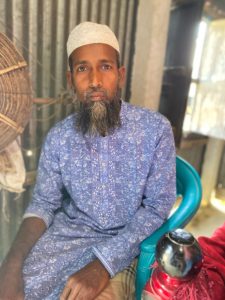
Abdur Rahim (pseudonym, aged 65+) lazily passes his days at his shabby little home in Duwaripara slum. Being a retired day-laborer, he is now financially dependent on his wife’s and daughter’s income, both of whom work as part-time maids for several families in Pallabi, Dhaka. Rahim, sitting at a tea-stall with a bunch of his contemporaries, expresses how irrelevant a visit to an Urban Primary Healthcare Center (UPHCC) is to his life – in fact, he is not even sure if there is a healthcare facility as such nearby. When asked where he goes to seek healthcare, he reluctantly replies that he “never needs to go to a doctor”, and that the compounder at the nearby drug store gives him all the medicines he needs for minor ailments like a headache or a stomach flu. Rahim has neither felt the necessity to measure his blood pressure, nor has he ever checked his blood glucose level. For him, even though he has not engaged in any productive activity for years, visiting a UPHCC for a general health check-up is a tedious use of his time.
After all, why would he? “I am not in any pain, and I don’t have any difficulty in doing what I do daily,” explains Rahim.
On the other hand, Foyez’s (pseudonym; aged 30+) family has been enlisted as “extreme poor” during a survey conducted a few years ago by the UPHCC health workers, and they now have a “Red Card” as a ticket to free healthcare for the whole family. He gladly described that he didn’t have to pay for his wife’s ANC check-ups, vitamins and supplements; the delivery was also conducted at “Nagar Matrisadan” (Delivery care center under the urban primary healthcare service delivery project) absolutely free of cost, otherwise a rickshaw puller like himself would have to suffer very much to manage the medical cost. When asked how many times he has taken free services from the UPHCC using the Red Card, he smiled and said that the center is mostly for pregnant women and newborns. As reported, he had brief episodes of illness in past few months – a fever, a headache that expanded to his neck and shoulders, restlessness and discomfort in his chest; he either bought himself some paracetamol from a local drug-store, or did nothing about his ill health. If he goes to visit a doctor, he would have to wait for a long time in the queue.
A long waiting time means lost income, and not everyone can afford it. Especially a rickshaw puller with 3 children to look after.
Men’s health as an issue has begun to attract more specific attention as growing evidence emerges of differential epidemiological trends between men and women, particularly with respect to men’s premature mortality from non-communicable diseases (NCDs) and morbidity linked to poor health-seeking behaviors. Several global public health research bodies have stated that in almost every country of the world, men are more likely than women to die before age 70, and data from the World Health Organization (WHO) suggest that approximately 52% of all NCD deaths worldwide (2018) occurred among men. The probability of men dying from cardiac ischemic diseases is 75% higher compared with women. However, 36% of deaths in men are preventable, compared with 19% in women. Why then are men underutilizing the available healthcare services? Gender and society’s perception of masculinity and men’s role in a family and community have big roles to play in men’s health. However, the pattern of men’s health-seeking and priorities of the urban healthcare service delivery projects in Bangladesh do leave questions about the inclusiveness of the system.
Men’s health in a system that prioritizes women
Bangladesh has a rather complicated urban health system. According to the Local Government Act 2009, the ultimate responsibility of providing primary healthcare to the urban population rests on the City Corporations and municipalities. Considering the inadequate health workforce of the Local Government Division (LGD), the Ministry of Local Government (MoLGRD) has launched several healthcare delivery projects, mostly through contracting out service delivery to NGOs. The Asian Development Bank funded Urban Primary Healthcare Service Delivery Project (UPHCP) was launched in 1998 to provide general healthcare and comprehensive reproductive healthcare to the urban population, with special emphasis on the urban poor. Although UPHCP, along with most other healthcare projects under MoLGRD, are bound to provide primary care to the entire urban population irrespective of their socio-demographic traits, Maternal and Child Health (MCH) and Sexual and Reproductive Health (SRH) services have traditionally been the main focus of the projects.
During the needs assessment of CHORUS Bangladesh Project 1 which aims to strengthen UPHCP for providing care, we explored not only the project documents that define the priorities of UPHCP, but also the approach and activities of the healthcare managers and providers. The NGOs are given certain service delivery targets that they are bound to meet in order to remain in the role of providers. Those targets mostly revolve around MCH and SRH such as number of antenatal care (ANC) visits, number of deliveries, number of family planning methods implemented per annum, etc. There are no targets that prioritize adult men’s health per se, unless a female counterpart’s reproductive health is linked to the health outcome of the man. The high rate of maternal and child mortality and morbidity related to reproductive health before and during the Millenium Development Goals (MDG) period might have influenced funders and the government to focus on MCH and SRH. Consequently, the community engagement services of the healthcare providers are directed towards increased utilization of services by women and adolescent females.
However, healthcare managers state that they have always kept their doors open for men.
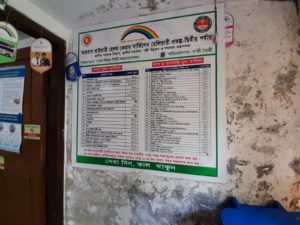
“We have even hung banners to invite men to the primary healthcare centers. Yet, we only get less than 20% male patients at the facilities,” said the Project Manager of one of the NGOs implementing UPHCP under Dhaka North City Corporation (DNCC). To provide insight about why the trend has been set like that, project manager of another NGO said, “I think since the Comprehensive Reproductive Healthcare Centers (CRHCC) and Primary Healthcare Centers (PHCC) in each area are run by the same NGO, men have this presumption that the NGO clinics are for women.” She further stated, “Almost all of our healthcare providers, including the health counsellors, are female. The men in our target population might not be comfortable consulting with female providers, as the urban poor communities still hold prejudices.” From interviews of healthcare providers and clients, we know that the community health workers play a big role in bringing ANC and family planning clients to the clinics, but they do not engage as such with adult men (or women) to bring potential or diagnosed NCD patients to the PHCCs.
Thus, we can safely conclude that the urban primary healthcare system at present is not prioritizing men’s health. On the other hand, research has shown that healthcare utilization by men increase at each higher level of care (from primary to secondary, and tertiary hospitals), which suggests that men seek care when the severity of their health issues require advanced interventions.
Health seeking behaviour of men: Does poverty make it worse?
It has been well documented that men are less likely to have a go-to source of healthcare, and are less likely to utilize the healthcare services when these services are accessible to them. For marginalized men, these healthcare-seeking behaviors are worse and are often structured by socioeconomic factors, which increases their risk for morbidity and mortality from preventable diseases. Men who are not under the coverage of healthcare settings may avoid these settings because they do not acknowledge their risk for chronic diseases, may experience challenges with navigating through healthcare settings (e.g., making appointments, transportation issues), or have difficulties with establishing trusting relationships with their providers. Men who access healthcare services with trust and confidence in the system show better healthcare seeking behavior and practices, hence, better health outcomes.
Apparently, under-utilization of healthcare services by men is not just relevant for low-resource settings. The W.K. Kellogg Foundation noted in the early 1990s “a growing concern, and now with alarm, the absence of men of all ages in the waiting rooms of clinics and other healthcare providers.” From 1997 to 1998, number of doctor visits for annual examinations and preventive services in the US were 100% higher for women than for men. This problem with men accessing healthcare has persisted decades later as men are 24% less likely than women to have visited a doctor within the past year, but are 32% more likely to be hospitalized. However, marginalized men are least likely to access healthcare and their health outcomes are even more dire than their counterparts.
Non-communicable diseases are often regarded as silent killers. As these chronic diseases take years – often decades – to develop symptoms that affect the physical and mental well-being of individuals, the only way to intervene before the onset of disease is to identify the population at risk and bring apparently healthy individuals under a health check-up and screening routine. Heijden et. al. described in their 2019 journal Working to stay healthy that health seeking behavior of slum dwellers of Dhaka city is based on competing priorities, where quick and effective care is key, focused on the ability to work and generate income. This takes place in a fragmented healthcare system characterized by mistrust of providers, and where healthcare decisions are influenced by word-of-mouth experiences of peers. Improving health in this context demands a comprehensive and integrated approach to health care delivery, with an emphasis on rapid diagnosis, effective treatment and referral, and improved trust in care providers.
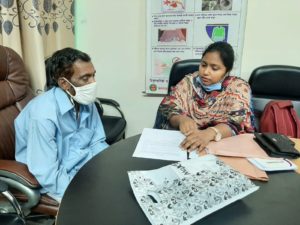
To improve men’s healthcare-seeking behaviors, researchers and practitioners will need to consider individual, economic, and social determinants of men’s healthcare-seeking behaviors and pertinent barriers toward improvement. The urban health system in Bangladesh needs to be sensitized to the healthcare seeking patterns and difficulties of men so that the system can be made more acceptable for men in need. Community health workers and primary care providers need to be trained and equipped to not only recognize the needs of adult men, but to also provide preventive care, i.e. screening, counselling and health education about risk factors, to improve health seeking behavior of this vulnerable group.
Originally published in: https://chorusurbanhealth.org/blog-mens-health-in-urban-bangladesh-is-the-urban-primary-healthcare-system-leaving-men-behind/