
• Privacy Policy
  • Terms & Condition
  • Archive

ARK Foundation

  • Home
  • About
    • About Organization
    • Our Partners
    • Global Networks & Leadership
  • Our Team
    • Advisor
    • Executive Director
    • Research and Development
    • Research Uptake & Communications
    • Programme and Training
    • Finance and Administration
    • Data and Field Management
  • Our Work
    • Communicable Disease
    • Non-communicable Disease
    • Multimorbidity
    • Antimicrobial Resistance
    • Maternal, Newborn, Child and Reproductive Health
    • Nutrition
    • Health Systems
    • Climate Change and Environment
    • Gender, Equity and Social Inclusion
  • News & Media
    • Event
    • News
    • Blog
    • Video
    • Newsletter
  • Resources
    • Journal Article
    • Report
    • Working Paper
    • Project Brief
    • Policy Brief
    • Conference Proceedings
    • Infographics
    • Posters
  • Career
  • Contact
/ Published in Non-Communicable Disease, Our Work

Community-led Responsive and Effective Urban Health Systems (CHORUS)

Community-led Responsive and Effective Urban Health Systems (CHORUS) is a Research Programme Consortium that brings together health researchers from South Asia, West Africa, and the UK. CHORUS works with communities, health professionals and city level decision makers to strengthen the urban health system, especially for the urban poor.

ARK Foundation is currently implementing three projects under CHORUS.

Project 1 aims to strengthen service delivery, health workforce and health information system at urban primary health care facilities to manage essential NCDs. To meet this aim, the study has three linked phases.

Phase one aims at understanding the existing NCD management system at urban primary health care facilities, through literature review, analysis of secondary data, interviews of policy makers, health workers, and urban slum dwellers, and data were analysed using the WHO Health System Building Blocks framework. Several gaps were found within the urban primary health care systems in terms of NCD management, including unavailability of NCD guidelines across urban primary health care facilities, lack of NCD training among workforce of these centres, and absence of a NCD health information system within the system.
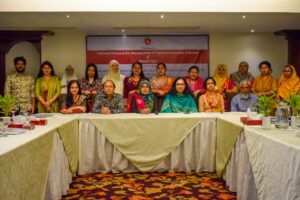
Findings from phase one then led to the second phase which involved health facility assessment of urban primary health care centres and constant engagement with policy makers, health care personnel and urban dwellers, especially the poor. Through this process potential interventions for gaps were identified which were:

  1. Ensuring availability of the “National Protocol for Management of High Blood Pressure and Diabetes at Primary Health Care Settings” at urban primary health care facilities,
  2. To train urban primary health care workforce on the protocol, and
  3. Introducing “Simple App” which is a mobile based application to record NCDs, and an NCD register at the facilities.

The third phase aimed at implementing the identified interventions at urban primary health care facilities. In order to achieve the goal, 16 urban primary health care facilities were selected which have equally been allocated to intervention and control groups. Implementation of the intervention would be evaluated using the RE-AIM (Reach, Effectiveness, Adoption, Implementation, Maintenance) framework, and involve a mix of methods such as observations, knowledge score assessment and interviews.
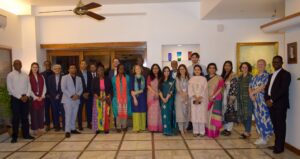
Project 2 aims to design and evaluate an appropriate strategic purchasing model for Bangladesh’s urban primary health care system and also to develop a guideline for undertaking strategic purchasing along with the capacity strengthening of purchasers in Urban Bangladesh.

To meet this aim, a mixed method study is being conducted which will use qualitative (rapid reviews, key informant interviews, in-depth interviews, focus group discussions, and consultation workshops), quantitative (Discrete Choice Experiment, secondary data analysis, cost and impact evaluation) and participatory methods (transect walk and photo voice). The study is being conducted by following 5 steps, each with several activities to address the study objectives.

Step 1 of the study aimed to understand the current situation of strategic purchasing in Bangladesh’s urban primary health care context. For this, 20 Key Informant Interviews (KII) have been conducted with policymakers from both the Ministry of Health and Family Welfare and the Ministry of Local Government, Rural Development and Cooperatives, development partners, urban health experts, and other relevant stakeholders. This qualitative exploration attempted to include all the existing urban primary health care models in the country.

Step 2 of the study focuses on understanding the purchasing needs of the urban community. This step will involve both qualitative interviews and participatory research methods. For IDIs and FGDs, people from urban areas, especially the poor, marginalised (physically and mentally disabled), and transgender community will be selected.

In step 3 of the study, the aim is to develop an appropriate model for purchasing primary health care in urban areas. Subsequently, step 4 will attempt to address the capacity gaps of the purchasers. And step 5 is related to costing and evaluating purchasing models as well as strengthening the capacity of purchasers.

Funding Agency: FCDO

Sponsor: University of Leeds, UK

Partner Organisations: University of Leeds, University of York, HERD International, JPGSPH,

Duration: April, 2020 to March 2026

What you can read next

Community Engagement for Tackling Anti-microbial Resistance (CE4AMR)
Community Dialogues in Bangladesh
Improving Outcomes in Mental and Physical Multimorbidity and Developing Research Capacity (IMPACT) in South Asia at the University of York

Recent Posts

  • Fragmentation in urban health service provision? A plurality of providers is the answer

    Abdullah Rafi, from ARK Foundation in Banglades...
  • International Women’s Day 2026

      When women give knowledge, care, and lea...
  • In-country public-private partnerships hold the key to promoting inclusiveness in Dutch trade and international cooperation agenda

    Read the PDF here...
  • COVID-19 and Tobacco

    Read the PDF here  ...
  • Taxation on Sugar-Sweetened Beverages (SSBs) in Bangladesh: What should we do?

    Read the PDF here...
  • Public Private Partnership in Improving Access and Utilization of Health Care Services: Scopes, Opportunities and Challenges

    Find the PDF here  ...
  • Influencing TB policy and practice in Bangladesh using a Public-Private Mix approach

    Read the PDF here Policy messages: TB case noti...
  • How can public-private partnerships enhance the use of long acting contraceptive methods in Bangladesh?

    Read the PDF here Using a public-private partne...
  • Improving the quality of care at community clinics in rural Bangladesh through new approaches

    Read the PDF here Key messages The training was...
  • Integrating tobacco cessation within the TB programme: Findings from the ‘TB & Tobacco’ study

    Find the PDF here Integrating tobacco cessation...
  • The Complicated Cigarette Tax Structure in Bangladesh is Causing Expansion of the Low-Tier Cigarette Market and Lower Tax Revenue

    Find the PDF here Implementing a uniform ad val...
  • Digital Health in Dhaka | Simple App | Transforming Urban Healthcare | Channel 24 | ARK Foundation

      Digital health is reshaping urban health...
  • বাংলাদেশে স্বাস্থ্যবিমা: বাস্তবসম্মত সমাধান নাকি শুধু আলোচনা? | Channel 24 | ARK Foundation

    স্বাস্থ্যসেবার ব্যয় কি নাগালের বাইরে চলে যাচ্ছ...
  • Course: Project Management in Public Health

    Download the prospectus from here Introduction ...
  • Precision at Scale: Managing 3,559 Survey Clusters in the World’s Largest Refugee Settlement

    Find the pdf version here or read it here By  Z...
  • The Areca Nut Paradox in Bangladesh: A Rapid Review of Cultural Embeddedness, Public Health Risks, Livelihood Dependence, and Policy Gaps

    Read it here or download the PDF version By Nab...
  • Why does it matter? Childhood obesity among school going children in Urban Bangladesh: Potential Way Forward

    Read the PDF here Written by Badruddin Saify Fo...
  • বৈষম্য কমাতে চাই কার্যকর প্রাথমিক স্বাস্থ্যসেবা | Prof. Dr. Liaquat Ali | ARK Foundation | Channel24

    স্বাস্থ্যসেবা কি শুধু প্রতিশ্রুতির মধ্যেই আটকে ...
  • How SCIMITAR-SA turns barriers into better support to quit tobacco

    Find the HTML version  SCIMITAR-SA is built aro...
  • Strengthening Tobacco Cessation Through Local Adaptation

    Find the HTML version here  WP1 focuses on adap...

Empower Your Career with ARK Foundation

Discover opportunities to make a difference in health, education, gender equality, and environmental sustainability.

JOIN US

ARK Foundation is a non-government, non-political and not-for-profit organization dedicated to the socio-economic development of Bangladesh. Through evidence-based research, training and communications it provides sustainable solutions for health, education and social development.

ADDRESS

Suite A-1, C-3 & C-4, House # 06, Road # 109,
Gulshan-2, Dhaka, Bangladesh, 1212

Phone: +88 02 55069866

Email: info@arkfoundationbd.org

LOCATION

  • GET SOCIAL

© 2025. All rights reserved. ARK Foundation.

TOP