• Privacy Policy
  • Terms & Condition
  • Archive

ARK Foundation

  • Home
  • About
    • About Organization
    • Our Partners
    • Global Networks & Leadership
  • Our Team
    • Advisor
    • Executive Director
    • Research and Development
    • Research Uptake & Communications
    • Programme and Training
    • Finance and Administration
    • Data and Field Management
  • Our Work
    • Communicable Disease
    • Non-communicable Disease
    • Multimorbidity
    • Antimicrobial Resistance
    • Maternal, Newborn, Child and Reproductive Health
    • Nutrition
    • Health Systems
    • Climate Change and Environment
    • Gender, Equity and Social Inclusion
  • News & Media
    • Event
    • News
    • Blog
    • Video
    • Newsletter
  • Resources
    • Journal Article
    • Report
    • Working Paper
    • Project Brief
    • Policy Brief
    • Conference Proceedings
    • Infographics
    • Posters
  • Career
  • Contact
/ Published in Non-Communicable Disease, Our Work

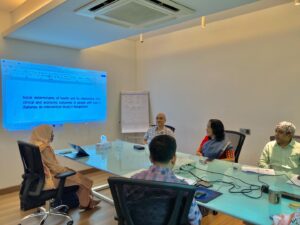
Social determinants of health (SDOH) and its relationship with clinical and economic outcomes in people with type 2 diabetes in Bangladesh

Social determinants of health and its relationship with clinical and economic outcomes in people with type 2 diabetes in Bangladesh
Diabetic association of Bangladesh (BADAS) 2024-25 ARK Foundation, in partnership with Diabetic association of Bangladesh (BADAS) is implementing a research study to understand the social determinant of health (SDOH) and its relationship with clinical and economic outcome of T2DM (Type2 Diabetes Mellitus) in Bangladesh with the research grant of Ministry of Health and Family Welfare.

The study has been implemented in eight BADAS centers located in eight districts of Bangladesh recruiting 840 T2DM patients of 40 years & above (105 from each center) at baseline in 2024 who were suffering from diabetes for at least five years. Data regarding sociodemographic, clinical, anthropometric, ophthalmic, health expenditure for treatment of T2DM were collected in the study.

As part of intervention diagnostic test expenditure for three biomarkers (FPG, 2hABF, HbA1c) at four time visits in four months interval and two biomarkers (Lipid profile, Serum Creatinine) at two time visits in 12 months interval in BADAS centers by the recruited T2DM patients were covered by the study. Besides health education session, cell phone-based m-Health intervention e.g., reminder for follow-up, drug compliance, healthy lifestyle messages are also provided for the recruited T2DM patients.

Endline data were collected from 772 (out of 840 recruited at baseline) T2DM patients in BADAS centers as on 2025 with 8.1% lost to follow up. Preliminary analysis of baseline data indicate one of the SDOH indicators i.e. household income was significantly associated with glycaemic control, with higher-income (>20000 BDT per month) participants more likely to achieve control than lower-income (≤20000 BDT per month) participants (18.2% vs 12.8%, p=0.03).

Protocol manuscript and manuscript on baseline data have been submitted to Trial and BMC Public Health Journals and currently under review

Funder: Ministry of Health and Family Welfare

Partner Organization: Diabetic Association of Bangladesh (BADAS)

Duration: 2024-2025

What you can read next

Establishing value sets for EQ-5D-3L and EQ-5D-5L in Bangladesh
Tobacco Control Capacity Programme
Improving the diagnosis and treatment of cardiovascular disease, diabetes and related conditions through primary health care in Bangladesh

Recent Posts

  • Universal Health Coverage needs more than a bigger budget. It needs institutions and skills

    As the nation is heading towards its 13th natio...
  • Developing and evaluating an adapted behavioral activation intervention for people with depression and diabetes (DiaDeM)

    DiaDeM stands for “Developing and evaluating an...
  • ThinkSpace: Quarterly Research Digest

    ARK Foundation is pleased to launch ThinkSpace,...
  • CHORUS Annual Partners’ Meeting

    The CHORUS Partners’ Meeting officially commenc...
  • আসন্ন নির্বাচনে রাজনৈতিক দলগুলোর কাছে স্বাস্থ্যখাতে প্রত্যাশা

    আগামী ত্রয়োদশ জাতীয় সংসদ নির্বাচনকে সামনে রেখে ...
  • 𝐋𝐨𝐜𝐚𝐥 𝐑𝐞𝐚𝐥𝐢𝐭𝐢𝐞𝐬 𝐚𝐧𝐝 𝐇𝐞𝐚𝐥𝐭𝐡 𝐂𝐚𝐫𝐞 𝐂𝐡𝐨𝐢𝐜𝐞𝐬: 𝐂𝐨𝐦𝐦𝐮𝐧𝐢𝐭𝐲 𝐏𝐞𝐫𝐬𝐩𝐞𝐜𝐭𝐢𝐯𝐞𝐬 𝐟𝐨𝐫 𝐄𝐪𝐮𝐢𝐭𝐚𝐛𝐥𝐞 𝐔𝐫𝐛𝐚𝐧 𝐏𝐫𝐢𝐦𝐚𝐫𝐲 𝐇𝐞𝐚𝐥𝐭𝐡 𝐂𝐚𝐫𝐞 𝐢𝐧 𝐃𝐡𝐚𝐤𝐚, 𝐁𝐚𝐧𝐠𝐥𝐚𝐝𝐞𝐬𝐡

    Let’s lookback at the impactful contributions f...
  • Identifying barriers and facilitators for health risk behaviours among people with severe mental illness in Bangladesh and Pakistan: a qualitative study

    Read the full article here People with severe m...
  • আসন্ন নির্বাচনে রাজনৈতিক দলগুলোর কাছে স্বাস্থ্যখাতে প্রত্যাশা

    আসন্ন নির্বাচনে রাজনৈতিক দলগুলোর কাছে স্বাস্থ্য...
  • Engaging rural communities in Bangladesh to address antimicrobial resistance via the community dialogue approach: a protocol for a cluster-randomized controlled trial

    Click here to read the full article Introductio...
  • From Intervention to Impact: A Qualitative Process Evaluation of a NCD Intervention to Strengthen Urban Resilience in Urban Dhaka City

    Let’s lookback at the impactful contributions f...
  • An mHealth (Mobile Health) Intervention for Smoking Cessation in People With Tuberculosis: A Cluster Randomized Clinical Trial

    Find the full article here A new research artic...
  • Understanding Access to Primary Healthcare in Dhaka’s Urban Slums: A Qualitative Inquiry into Community Perceptions and Health Equity Challenges

    Find the PDF here or Read HTML version ARK Foun...
  • Bangladesh’s first national EQ-5D health value set unveiled

    ARK Foundation organized a dissemination event ...
  • Major Barriers on Universal Health Coverage in Bangladesh

    In 2020, while the government spent Tk 2,187 cr...
  • Non-communicable Disease Condition in Bangladesh

    Did you know that over 70% of deaths in Banglad...
  • Universal Health Coverage | Ensuring Equity in Every Health Decision

    𝐔𝐧𝐢𝐯𝐞𝐫𝐬𝐚𝐥 𝐇𝐞𝐚𝐥𝐭𝐡 𝐂𝐨𝐯𝐞𝐫𝐚𝐠𝐞 𝐃𝐚𝐲 𝟐𝟎𝟐𝟓 calls us to ...
  • Webinar: Who Gets Left Behind? Addressing Health Vulnerability and Inequity in Urban Contexts

    Thursday 11 December 2025  04.00 – 05.00 ...
  • AMR Situation in Bangladesh

    Only a week-long awareness campaign is not enou...
  • 𝐖𝐨𝐫𝐥𝐝 𝐇𝐞𝐚𝐫𝐭 𝐃𝐚𝐲 𝟐𝟎𝟐𝟓 — 𝐃𝐨𝐧’𝐭 𝐌𝐢𝐬𝐬 𝐚 𝐁𝐞𝐚𝐭

      Heart disease is one of the leading caus...
  • স্বাস্থ্য খাতে সমতা নিশ্চিত করা জরুরি

    প্রফেসর ডঃ রুমানা হক বৈশ্বিক স্বাস্থ্য সূচকে বা...

Empower Your Career with ARK Foundation

Discover opportunities to make a difference in health, education, gender equality, and environmental sustainability.

JOIN US

ARK Foundation is a non-government, non-political and not-for-profit organization dedicated to the socio-economic development of Bangladesh. Through evidence-based research, training and communications it provides sustainable solutions for health, education and social development.

ADDRESS

Suite A-1, C-3 & C-4, House # 06, Road # 109,
Gulshan-2, Dhaka, Bangladesh, 1212

Phone: +88 02 55069866

Email: info@arkfoundationbd.org

LOCATION

  • GET SOCIAL

© 2025. All rights reserved. ARK Foundation.

TOP