
• Privacy Policy
  • Terms & Condition
  • Archive

ARK Foundation

  • Home
  • About
    • About Organization
    • Our Partners
    • Global Networks & Leadership
  • Our Team
    • Advisor
    • Executive Director
    • Research and Development
    • Research Uptake & Communications
    • Programme and Training
    • Finance and Administration
    • Data and Field Management
  • Our Work
    • Communicable Disease
    • Non-communicable Disease
    • Multimorbidity
    • Antimicrobial Resistance
    • Maternal, Newborn, Child and Reproductive Health
    • Nutrition
    • Health Systems
    • Climate Change and Environment
    • Gender, Equity and Social Inclusion
  • News & Media
    • Event
    • News
    • Blog
    • Video
    • Newsletter
  • Resources
    • Journal Article
    • Report
    • Working Paper
    • Project Brief
    • Policy Brief
    • Conference Proceedings
    • Infographics
    • Posters
  • Career
  • Contact
/ Published in Featured, News, News and Media

Experts urge action as misinformation threatens vaccination efforts

Read the report here

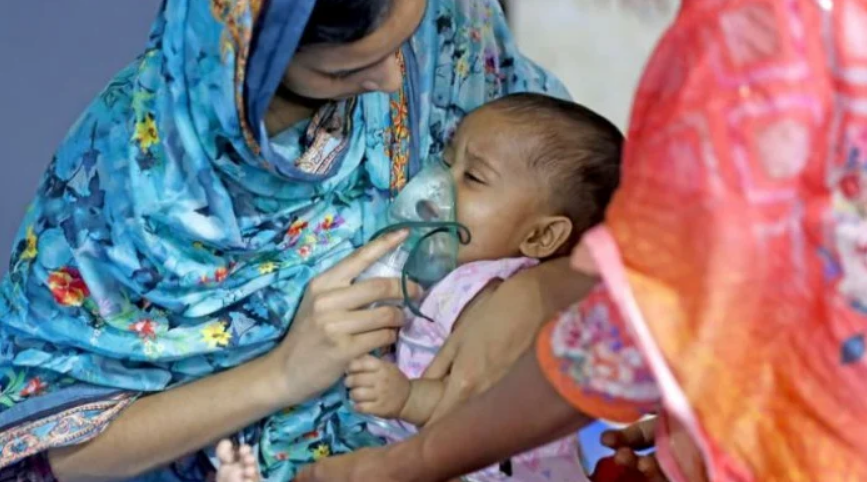
As measles cases resurface in Bangladesh and misinformation continues to distort public understanding of vaccines, experts say the urgency to defend science-based healthcare has become increasingly evident.

They made the remarks at a webinar titled ‘Standing with Science in the Age of Misinformation: Protecting Public Health’, organised by ARK Foundation today (12 April). The event brought together leading voices to confront the growing threat of false narratives in health communication.

They drew attention to how misinformation is actively undermining vaccination efforts, disease prevention, public trust in healthcare, and how we can retain it.

The webinar featured a distinguished and influential panel, including Dr Mahmuda Ali, health officer at Dhaka North City Corporation; Professor Mahmudur Rahman, former director of IEDCR; health expert Dr Syed Mahfuzul Huq; health economist and executive director of ARK Foundation Professor Rumana Huque; and journalists Shishir Moral and Tawsia Tajmim. The session was moderated by Zunayed Al Azdi, senior research manager at ARK Foundation.

Dr Syed Mahfuzul Huq, drawing on his experience with the World Health Organization (WHO) in non-communicable diseases (NCDs), stated that various entities deliberately distort or manipulate scientific evidence for commercial gain and marketing purposes, posing serious risks to public health.

Reflecting on field-level realities, Dr Mahmuda Ali said, “After proper training and planning, when vaccination campaigns begin in real life, different challenges and rumours are always there. The government and city corporations are continuously working to raise awareness among religious and social groups to tackle this challenge.”

Professor Mahmudur Rahman highlighted the need to strengthen accountability across all sectors and adapt public health programmes in response to evolving community behaviour and practices.

Journalist Shishir Moral pointed out that while mainstream media, through quality control, plays a role in curbing misinformation, social media often accelerates its spread, stressing the need for grassroots-level awareness to identify sources of false information.

Tawsia Tajmim shared her firsthand experience of the ongoing measles outbreak in Bangladesh, underscoring the importance of timely and accurate data from the government and relevant authorities.

In the concluding remarks, Professor Rumana Huque called for building a collective social movement to counter misinformation with scientific evidence, stressing the need for coordinated efforts across sectors through sustained capacity development, training, and widespread awareness campaigns.

Speakers also urged the strengthening of legislative frameworks to prevent misinformation from undermining public health efforts.


Originally published in the Business Standard on 12 April 2026
Photo credit: TBS

What you can read next

Closing the Gap: How Urban Primary Health Care Can Achieve Health Equity
Air Pollution is Changing: The Hidden Climate Risks We are Not Talking About
10 percent increase in the price of cigarettes would reduce overall cigarette smoking among people by 7.1 percent

Recent Posts

  • Webinar on ๐’๐ญ๐š๐ง๐๐ข๐ง๐  ๐ฐ๐ข๐ญ๐ก ๐’๐œ๐ข๐ž๐ง๐œ๐ž ๐ข๐ง ๐ญ๐ก๐ž ๐€๐ ๐ž ๐จ๐Ÿ ๐Œ๐ข๐ฌ๐ข๐ง๐Ÿ๐จ๐ซ๐ฆ๐š๐ญ๐ข๐จ๐ง: ๐๐ซ๐จ๐ญ๐ž๐œ๐ญ๐ข๐ง๐  ๐๐ฎ๐›๐ฅ๐ข๐œ ๐‡๐ž๐š๐ฅ๐ญ๐ก

    ย Join us for an insightful discussion: โ€œ๐’๐ญ๐š๐ง๐๐ข๐ง...
  • Air Pollution is Changing: The Hidden Climate Risks We are Not Talking About

    Read the blog here or download the PDF version ...
  • mHealth intervention (mTB-Tobacco) for smoking cessation in people with drug-sensitive pulmonary tuberculosis in Bangladesh and Pakistan: protocol for an adaptive design, cluster randomised controlled trial (Quit4TB)

    Read the article here or download the PDF versi...
  • Gender differences in mental health help-seeking behaviour in Bangladesh: findings from a cross-sectional online survey

    Read the article here or download PDF version A...
  • Designing a strategic purchasing framework for urban primary healthcare services in Bangladesh: a protocol for a mixed-method study with a discrete choice experiment

    Find the article here or download PDF version A...
  • Expansion of low-price cigarette market and its implications for cigarette tax revenue: Evidence from Bangladesh

    Read the article here or download the PDF versi...
  • Engaging rural communities in Bangladesh to address antimicrobial resistance via the community dialogue approach: a protocol for a cluster-randomized controlled trial

    Read the article here or download the PDF versi...
  • Associations between sociodemographic characteristics and knowledge about antibiotics and antibiotic resistance and usage of antibiotics from a One Health perspective in rural Bangladesh: a descriptive cross-sectional study

    Find the article here or download the PDF versi...
  • Perceived barriers and the price inflating effects of informal payments in fresh food retailing in urban Bangladesh

    Find it here or download the PDF version  ...
  • Facilitators and challenges to access fresh fruits and vegetables in a low to middle income group in Bangladesh: Consumersโ€™ perception

    Find it here or download the PDF version Abstra...
  • How prepared are urban primary care facilities to manage hypertension and type 2 diabetes in Dhaka, Bangladesh? A cross-sectional descriptive study of government urban dispensaries and NGO clinics

    Find the article here or download the PDF versi...
  • Tobacco cessation intervention for individuals with severe mental illness in Bangladesh, India, and Pakistan: protocol for a multi-country feasibility randomised controlled trial (SCIMITAR-SA)

    Read the article hereย or download the PDF versi...
  • When Cities Grow, Movement Shrinks: Urbanisation and Physical Activity in Bangladesh

    Find the PDF here Written byย Riona Khanย and S M...
  • Patient and provider perspectives of pluralistic primary care services in urban Bangladesh: a qualitative study

    Read it hereย or find PDF here Abstract Backgrou...
  • The Karlson-Holm-Breen (KHB) Method: Why Logistic Mediation Results Might Be Misleading?

    Read pdf here Written by Ibrahim Hasan and S M ...
  • South Asian Coalition of Policy and Evidence for Equitable food systems (SCOPE)

    The South Asian Coalition of Policy and Evidenc...
  • Fragmentation in urban health service provision? A plurality of providers is the answer

    Read it here or download PDFย  Abdullah Rafi, fr...
  • International Women’s Day 2026

      When women give knowledge, care, and lea...
  • In-country public-private partnerships hold the key to promoting inclusiveness in Dutch trade and international cooperation agenda

    Read the PDF here...
  • COVID-19 and Tobacco

    Read the PDF here  ...

Empower Your Career with ARK Foundation

Discover opportunities to make a difference in health, education, gender equality, and environmental sustainability.

JOIN US

ARK Foundation is a non-government, non-political and not-for-profit organization dedicated to the socio-economic development of Bangladesh. Through evidence-based research, training and communications it provides sustainable solutions for health, education and social development.

ADDRESS

Suite A-1, C-3 & C-4, House # 06, Road # 109,
Gulshan-2, Dhaka, Bangladesh, 1212

Phone:ย +88 02 55069866

Email:ย info@arkfoundationbd.org

LOCATION

  • GET SOCIAL

ยฉ 2025. All rights reserved. ARK Foundation.

TOP