ARK Foundation

  • Home
  • About
    • About Organization
    • Our Partners
    • Global Networks & Leadership
  • Our Team
    • Advisor
    • Executive Director
    • Research and Development
    • Research Uptake & Communications
    • Programme and Training
    • Finance and Administration
    • Data and Field Management
  • Our Work
    • Communicable Disease
    • Non-communicable Disease
    • Multimorbidity
    • Antimicrobial Resistance
    • Maternal, Newborn, Child and Reproductive Health
    • Nutrition
    • Health Systems
    • Climate Change and Environment
    • Gender, Equity and Social Inclusion
  • News & Media
    • Event
    • News
    • Blog
    • Video
    • Newsletter
  • Resources
    • Journal Article
    • Report
    • Working Paper
    • Project Brief
    • Policy Brief
    • Conference Proceedings
    • Infographics
    • Posters
  • Training
    • Training Portfolio
    • About ARK CPL
    • Qualitative Research in Action
    • Project Management in Public Health
  • Career
  • Contact
/ Published in Nutrition, Our Work

Fiscal and Regulatory Mechanisms for Promoting Healthy Diets in Bangladesh

Diet-related non-communicable diseases (NCDs) continue to rise in Bangladesh, disproportionately affecting women, children, and the poor. The complex interaction of the fresh food supply chain, price drivers, competition from low-cost and low-nutrition products, and cultural influences affect access to consuming a healthy diet. This project aimed to review how fiscal and regulatory measures can be used to promote healthy diets and reduce NCD-related mortality and morbidity.
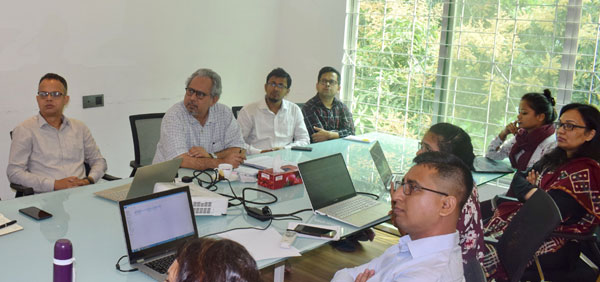
The research team used four complementary methods to understand existing systems and policies that promote or hinder access to healthy diets: policy mapping, supply chain analysis, in-depth interviews, and stakeholder engagement. The researchers worked with a wide range of stakeholders to identify the policy gaps in promoting healthy diets and explore relevant barriers and facilitators to implement such policies.

Key Publications:

  • Azad A K, Huque R. The crowding-out effect of sugar-sweetened beverages (SSBs) on household expenditure patterns in Bangladesh. BMC Public Health. 2023. https://doi.org/10.1186/s12889-023-16290-7.
  • Hossain MN, Islam MS, Abdullah S M, Alam SM, Huque R. Vegetables and fruits retailers in two urban areas of Bangladesh: Disruption due to COVID–19 and implications for NCDs. Plos one. 2023; 18 (1), e0280188 https://journals.plos.org/plosone/article? id=10.1371/journal.pone.0280188

Funding: International Development Research Centre (IDRC)

Duration: January 2020 – June 2023
What you can read next

“Power of Learning” Programme & Civil Society Strengthening Initiatives in Bangladesh
South Asian Coalition of Policy and Evidence for Equitable food systems (SCOPE)
Health Budget Analysis Case Study from Secondary and Primary level healthcare facilities in Kurigram District, Bangladesh

Recent Posts

  • Beyond the barcode: Strengthening digital verification of sugar-sweetened beverages in Bangladesh

    Find the pdf here  ...
  • বিনিয়োগে আস্থা ফেরানোই এখন সবচেয়ে বড় চ্যালেঞ্জ

    মো. কাউসার আলম। দ্য ইনস্টিটিউট অব কস্ট অ্যান্ড...
  • Beyond the Headline: Understanding Bangladesh’s 325 Retracted Research Papers

    What the reported figure tells us, what it does...
  • ThinkSpace (vol 2)

    The most powerful forces shaping our health are...
  • [Op-Ed] Why are we still struggling to make health insurance work?

    By Professor. Rumana Huque Bangladesh has commi...
  • [Op-Ed] Rethinking Bangladesh’s health sector reform after SWAp

    Written by Professor Rumana Huque After more th...
  • [OP-ED] Bangladesh’s next health breakthrough

    A mother in a rural village should not have to ...
  • Small Changes, Safer Prescribing: Lessons from a Bangladesh Public Hospital Antimicrobial Stewardship (AMS) Pilot

    Project note: This article is a public summary ...
  • The Budget That Shrinks: How Bangladesh’s Health Allocations Disappear Over Time

    Download PDF here or read the HTML version Writ...
  • A Costly Assumption: What Every BDHS Researcher Should Know Before Combining Survey Waves

    [PDF Version]  Written by Salina Siddiqua, Dr. ...
  • 𝐘𝐎𝐔𝐑 𝐕𝐎𝐈𝐂𝐄. 𝐘𝐎𝐔𝐑 𝐂𝐈𝐓𝐘. 𝐘𝐎𝐔𝐑 𝐅𝐔𝐓𝐔𝐑𝐄.

    To carry forward the impact of 𝐖𝐨𝐫𝐥𝐝 𝐍𝐨 𝐓𝐨𝐛𝐚𝐜𝐜𝐨...
  • বাণিজ্যিক স্বার্থে নীতিগত আপস?

    বাংলাদেশ যখন তামাকমুক্ত ভবিষ্যতের দিকে এগোতে চা...
  • শ্রমিকের স্বাস্থ্য রাষ্ট্রের সম্পদ

    গত বছর প্রকাশিত বিশ্বব্যাংকের প্রতিবেদন বলছে, শ...
  • OP-ED: Quiet crisis of labour

    EVERY year, as the first of May arrives with th...
  • Adding data to Bangladesh’s DHIS2 using the Simple App

    Download the case study here or find it here De...
  • Bridging the Gap in Urban Health Journalism in Bangladesh

    Find the Policy Brief Here...
  • 𝐂𝐨𝐦𝐦𝐮𝐧𝐢𝐭𝐲-𝐥𝐞𝐝 𝐑𝐞𝐬𝐩𝐨𝐧𝐬𝐢𝐯𝐞 𝐚𝐧𝐝 𝐄𝐟𝐟𝐞𝐜𝐭𝐢𝐯𝐞 𝐔𝐫𝐛𝐚𝐧 𝐇𝐞𝐚𝐥𝐭𝐡 𝐒𝐲𝐬𝐭𝐞𝐦𝐬 (𝐂𝐇𝐎𝐑𝐔𝐒) — 𝐖𝐡𝐚𝐭’𝐬 𝐍𝐞𝐱𝐭?

    One of ARK Foundation’s major urban health init...
  • Experts urge action as misinformation threatens vaccination efforts

    Read the report here As measles cases resurface...
  • Webinar on 𝐒𝐭𝐚𝐧𝐝𝐢𝐧𝐠 𝐰𝐢𝐭𝐡 𝐒𝐜𝐢𝐞𝐧𝐜𝐞 𝐢𝐧 𝐭𝐡𝐞 𝐀𝐠𝐞 𝐨𝐟 𝐌𝐢𝐬𝐢𝐧𝐟𝐨𝐫𝐦𝐚𝐭𝐢𝐨𝐧: 𝐏𝐫𝐨𝐭𝐞𝐜𝐭𝐢𝐧𝐠 𝐏𝐮𝐛𝐥𝐢𝐜 𝐇𝐞𝐚𝐥𝐭𝐡

     Join us for an insightful discussion: “𝐒𝐭𝐚𝐧𝐝𝐢𝐧...
  • Air Pollution is Changing: The Hidden Climate Risks We are Not Talking About

    Read the blog here or download the PDF version ...

Empower Your Career with ARK Foundation

Discover opportunities to make a difference in health, education, gender equality, and environmental sustainability.

JOIN US

ARK Foundation is a non-government, non-political and not-for-profit organization dedicated to the socio-economic development of Bangladesh. Through evidence-based research, training and communications it provides sustainable solutions for health, education and social development.

ADDRESS

Suite A-1, C-3 & C-4, House # 06, Road # 109,
Gulshan-2, Dhaka, Bangladesh, 1212

Phone: +88 02 55069866

Email: info@arkfoundationbd.org

LOCATION

  • GET SOCIAL

© 2025. All rights reserved. ARK Foundation.

TOP