ARK Foundation

  • Home
  • About
    • About Organization
    • Our Partners
    • Global Networks & Leadership
  • Our Team
    • Advisor
    • Executive Director
    • Research and Development
    • Research Uptake & Communications
    • Programme and Training
    • Finance and Administration
    • Data and Field Management
  • Our Work
    • Communicable Disease
    • Non-communicable Disease
    • Multimorbidity
    • Antimicrobial Resistance
    • Maternal, Newborn, Child and Reproductive Health
    • Nutrition
    • Health Systems
    • Climate Change and Environment
    • Gender, Equity and Social Inclusion
  • News & Media
    • Event
    • News
    • Blog
    • Video
    • Newsletter
  • Resources
    • Journal Article
    • Report
    • Working Paper
    • Project Brief
    • Policy Brief
    • Conference Proceedings
    • Infographics
    • Posters
  • Training
    • Training Portfolio
    • About ARK CPL
    • Qualitative Research in Action
    • Project Management in Public Health
  • Career
  • Contact

Utilisation and Effectiveness of Women Friendly Hospital Initiative: Problems, Prospects and Way Forward

by
The Women Friendly Hospital Initiative (WFHI) was launched in Bangladesh in 1998 with the goal of improving the quality of healthcare and addressing the needs of women during pregnancy, childbirth, and postpartum. The initiative aimed to reduce maternal mortality, fight against violence, and eliminate discrimination against women. It focuses on creating environment for women to
Read more
  • Published in Gender Equity and Social Inclusion, Our Work
No Comments

Understanding the ‘Overlapping’ Risks of Climate Change and Urbanisation

by
In the era of climate change, growing inequality, rapid urbanisation, humanity is dealing with a complex knot of apparently separate but actually deeply entangled risks. If not addressed the risk synchronisation can lead to critical crises and eventually will overwhelm the societal capacity to adapt. These overlapping risks (OR) have differential impact across gender. Decision
Read more
  • Published in Climate Change and Environment, Our Work
No Comments

Fiscal and Regulatory Mechanisms for Promoting Healthy Diets in Bangladesh

by
Diet-related non-communicable diseases (NCDs) continue to rise in Bangladesh, disproportionately affecting women, children, and the poor. The complex interaction of the fresh food supply chain, price drivers, competition from low-cost and low-nutrition products, and cultural influences affect access to consuming a healthy diet. This project aimed to review how fiscal and regulatory measures can be
Read more
  • Published in Nutrition, Our Work
No Comments

Community-led Responsive and Effective Urban Health Systems (CHORUS)

by
CHORUS is a Research Programme Consortium that brings together health researchers from South Asia, West Africa, and the UK. CHORUS works with communities, health professionals and city level decision makers to strengthen the urban health system, especially for the urban poor. ARK Foundation is currently implementing three projects under CHORUS. Project 1 aims to strengthen
Read more
  • Published in Featured, Health Systems, Our Work
No Comments

A Multicomponent Intervention to Reduce Home-Exposure to Second-Hand Smoke (SHS) During Pregnancy and Postnatal Period (IMPRESS)

by
The IMPRESS was a pilot trial of a multi-component intervention which aimed to culturally adapt, and then evaluate, the effectiveness of evidence-based strategies to reduce second-hand smoking within homes in the peri-urban area of Bangladesh. It also aimed to determine the costs versus benefits of implementing such an intervention. The study was carried out in
Read more
  • Published in Featured, Maternal Newborn Child and Reproductive Health, Our Work
No Comments

Community Engagement for Tackling Anti-microbial Resistance (CE4AMR)

by
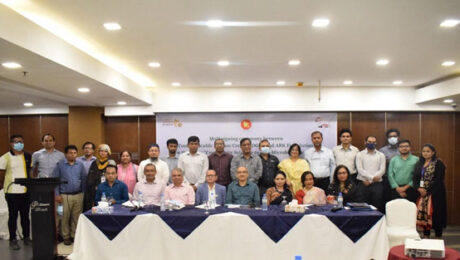
Antimicrobial resistance (AMR) is a global health concern that requires a multidisciplinary approach. Community engagement (CE) has been recognized as a crucial strategy for addressing AMR, as it involves the active participation of community stakeholders in identifying and implementing sustainable interventions. However, there is a need to understand how CE approaches are currently utilised in
Read more
  • Published in Antimicrobial Resistance, Our Work
No Comments

Community Solution to Antimicrobial Resistance (COSTAR)

by
Antimicrobial resistance (AMR) is a growing threat to global health, food sustainability, and socio-economic development. It is estimated that AMR infections cause approximately 700,000 human deaths each year globally and this figure is set to rise to 10 million by 2050 if no action is taken. Multi-sectoral action that addresses human and animal health, agriculture,
Read more
  • Published in Antimicrobial Resistance, Featured, Our Work
No Comments

Improving Outcomes in Mental and Physical Multimorbidity and Developing Research Capacity (IMPACT) in South Asia at the University of York

by
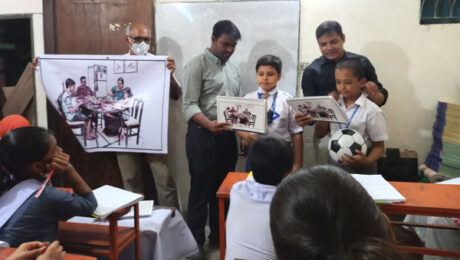
People with severe mental illness (SMI; i.e. schizophrenia, bipolar affective disorder and severe depression with psychosis) die on average 10-20 years earlier than the general population. Around 80% of deaths in people with SMI are due to preventable physical illnesses, most commonly cardio-metabolic diseases, respiratory disorders, and infectious diseases. Comorbidity of physical and mental illness
Read more
  • Published in Featured, Multimorbidity, Our Work
No Comments

Children Learning About Second-Hand Smoke (CLASS-III): A Cluster Randomised Controlled Trial of a School-Based Smoke-Free Intervention

by
Children Learning About Second-hand Smoke (CLASS-III) is an ongoing multinational cRCT project of ARK Foundation in collaboration with the University of York, United Kingdom. The project aims to assess the effectiveness and cost-effectiveness of school-based Smoke-Free Intervention (SFI) in reducing children’s exposure to second-hand smoking (SHS) and the frequency and severity of respiratory symptoms. The
Read more
  • Published in Featured, Non-Communicable Disease, Our Work
No Comments

Core outcome sets for trials of interventions to prevent and to treat multimorbidity in adults in low and middle-income countries: the COSMOS study

by
Abstract Introduction The burden of multimorbidity is recognised increasingly in low- and middle-income countries (LMICs), creating a strong emphasis on the need for effective evidence-based interventions. Core outcome sets (COS) appropriate for the study of multimorbidity in LMICs do not presently exist. These are required to standardise reporting and contribute to a consistent and cohesive
Read more
  • Published in Journal Article, Resources

No Comments
  • 5
  • 6
  • 7
  • 8
  • 9
  • 10

Recent Posts

  • ThinkSpace (vol 2)

    The most powerful forces shaping our health are...
  • [Op-Ed] Why are we still struggling to make health insurance work?

    By Professor. Rumana Huque Bangladesh has commi...
  • [Op-Ed] Rethinking Bangladesh’s health sector reform after SWAp

    Written by Professor Rumana Huque After more th...
  • [OP-ED] Bangladesh’s next health breakthrough

    A mother in a rural village should not have to ...
  • Small Changes, Safer Prescribing: Lessons from a Bangladesh Public Hospital Antimicrobial Stewardship (AMS) Pilot

    Project note: This article is a public summary ...
  • The Budget That Shrinks: How Bangladesh’s Health Allocations Disappear Over Time

    Download PDF here or read the HTML version Writ...
  • A Costly Assumption: What Every BDHS Researcher Should Know Before Combining Survey Waves

    [PDF Version]  Written by Salina Siddiqua, Dr. ...
  • 𝐘𝐎𝐔𝐑 𝐕𝐎𝐈𝐂𝐄. 𝐘𝐎𝐔𝐑 𝐂𝐈𝐓𝐘. 𝐘𝐎𝐔𝐑 𝐅𝐔𝐓𝐔𝐑𝐄.

    To carry forward the impact of 𝐖𝐨𝐫𝐥𝐝 𝐍𝐨 𝐓𝐨𝐛𝐚𝐜𝐜𝐨...
  • বাণিজ্যিক স্বার্থে নীতিগত আপস?

    বাংলাদেশ যখন তামাকমুক্ত ভবিষ্যতের দিকে এগোতে চা...
  • শ্রমিকের স্বাস্থ্য রাষ্ট্রের সম্পদ

    গত বছর প্রকাশিত বিশ্বব্যাংকের প্রতিবেদন বলছে, শ...
  • OP-ED: Quiet crisis of labour

    EVERY year, as the first of May arrives with th...
  • Adding data to Bangladesh’s DHIS2 using the Simple App

    Download the case study here or find it here De...
  • Bridging the Gap in Urban Health Journalism in Bangladesh

    Find the Policy Brief Here...
  • 𝐂𝐨𝐦𝐦𝐮𝐧𝐢𝐭𝐲-𝐥𝐞𝐝 𝐑𝐞𝐬𝐩𝐨𝐧𝐬𝐢𝐯𝐞 𝐚𝐧𝐝 𝐄𝐟𝐟𝐞𝐜𝐭𝐢𝐯𝐞 𝐔𝐫𝐛𝐚𝐧 𝐇𝐞𝐚𝐥𝐭𝐡 𝐒𝐲𝐬𝐭𝐞𝐦𝐬 (𝐂𝐇𝐎𝐑𝐔𝐒) — 𝐖𝐡𝐚𝐭’𝐬 𝐍𝐞𝐱𝐭?

    One of ARK Foundation’s major urban health init...
  • Experts urge action as misinformation threatens vaccination efforts

    Read the report here As measles cases resurface...
  • Webinar on 𝐒𝐭𝐚𝐧𝐝𝐢𝐧𝐠 𝐰𝐢𝐭𝐡 𝐒𝐜𝐢𝐞𝐧𝐜𝐞 𝐢𝐧 𝐭𝐡𝐞 𝐀𝐠𝐞 𝐨𝐟 𝐌𝐢𝐬𝐢𝐧𝐟𝐨𝐫𝐦𝐚𝐭𝐢𝐨𝐧: 𝐏𝐫𝐨𝐭𝐞𝐜𝐭𝐢𝐧𝐠 𝐏𝐮𝐛𝐥𝐢𝐜 𝐇𝐞𝐚𝐥𝐭𝐡

     Join us for an insightful discussion: “𝐒𝐭𝐚𝐧𝐝𝐢𝐧...
  • Air Pollution is Changing: The Hidden Climate Risks We are Not Talking About

    Read the blog here or download the PDF version ...
  • mHealth intervention (mTB-Tobacco) for smoking cessation in people with drug-sensitive pulmonary tuberculosis in Bangladesh and Pakistan: protocol for an adaptive design, cluster randomised controlled trial (Quit4TB)

    Read the article here or download the PDF versi...
  • Gender differences in mental health help-seeking behaviour in Bangladesh: findings from a cross-sectional online survey

    Read the article here or download PDF version A...
  • Designing a strategic purchasing framework for urban primary healthcare services in Bangladesh: a protocol for a mixed-method study with a discrete choice experiment

    Find the article here or download PDF version A...

Empower Your Career with ARK Foundation

Discover opportunities to make a difference in health, education, gender equality, and environmental sustainability.

JOIN US

ARK Foundation is a non-government, non-political and not-for-profit organization dedicated to the socio-economic development of Bangladesh. Through evidence-based research, training and communications it provides sustainable solutions for health, education and social development.

ADDRESS

Suite A-1, C-3 & C-4, House # 06, Road # 109,
Gulshan-2, Dhaka, Bangladesh, 1212

Phone: +88 02 55069866

Email: info@arkfoundationbd.org

LOCATION

  • GET SOCIAL

© 2025. All rights reserved. ARK Foundation.

TOP