Read it here or download the PDF version
By Nabila Binth Jahan & Dr. Rumana Huque
1. INTRODUCTION
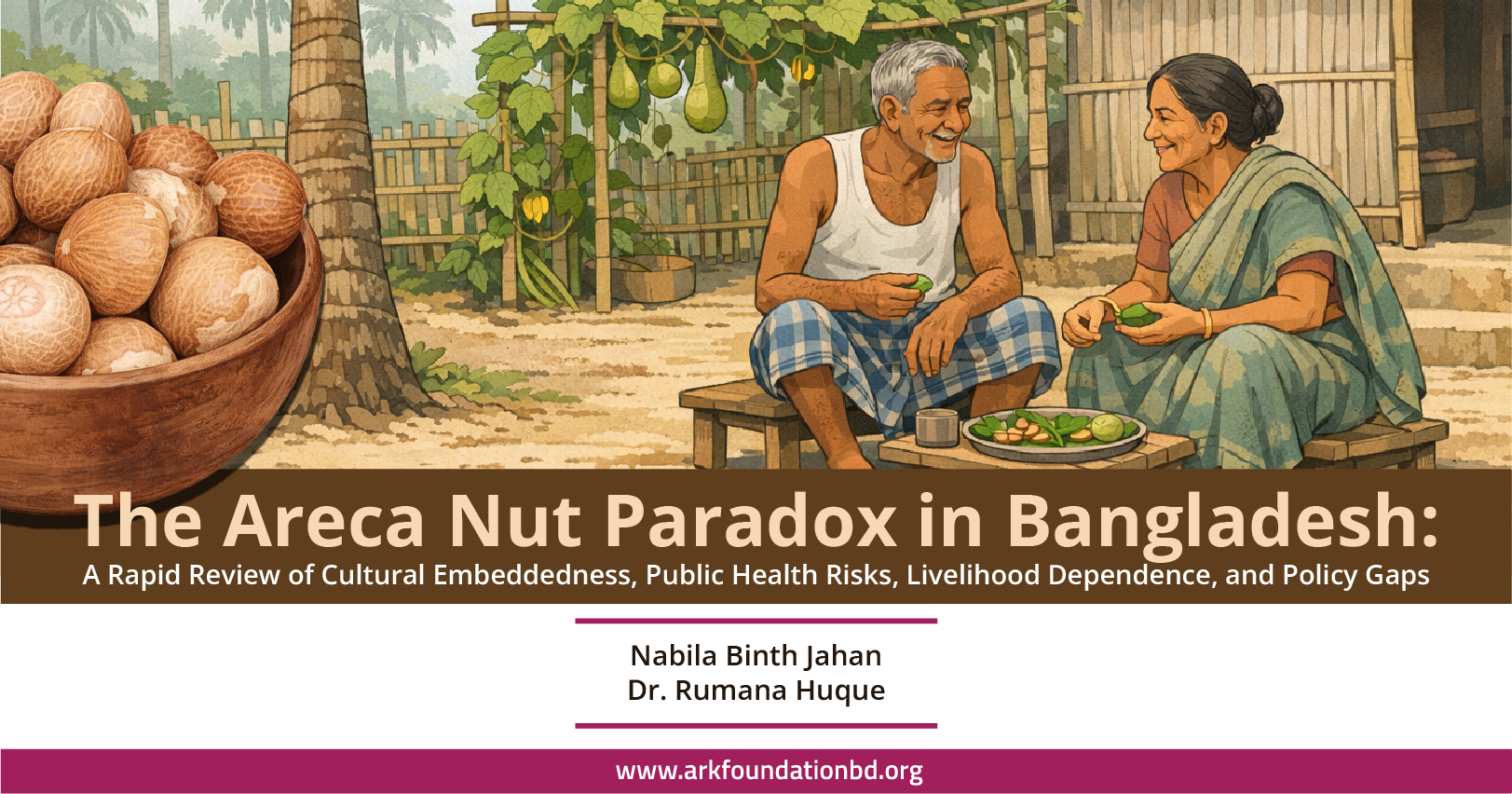
The areca nut, also known as the betel nut, is the fruit of the Areca catechu L. palm from the Arecaceae family (Tong et al., 2024). In Bangladesh, it is known locally as Supari or Gua. This tall palm tree, which can grow up to 30-45 meters, produces an ovoid, orange-coloured fruit. It is most commonly used for chewing as part of a “pan” or betel quid, which typically includes betel leaf (Piper betle) and slaked lime. Consumed by an estimated 600 million people globally, the areca nut holds significant cultural and religious importance, particularly in the Indian subcontinent, East and Southeast Asia, and the Pacific Islands. In these regions, it is regarded as a socially accepted tradition that fosters social relationships and community connections (Franke et al., 2014). Similar to other South Asian countries, it is considered a marker of sociocultural identity in many regions of Bangladesh (Chowdhury, 2022).
Bangladesh is a major producer of areca nut, ranking second globally after India. In 2023, India’s share of global areca nut production was a dominant 53.37%, with Bangladesh following at 18.66%. Other notable producers included Indonesia (8.11%), Myanmar (7.86%), China (5.06%), and Taiwan (5.06%). Meanwhile, Sri Lanka held a 3.3% share, Thailand 2.26%, and Bhutan 0.93%, with Nepal, Kenya, and the Maldives making minimal contributions. Year-over-year production data showed substantial growth in Bangladesh (10.05%) and Bhutan (8.26%), while Nepal experienced a significant decline of 10.03%, and the shares for China and Taiwan decreased by 1.7% each (Global Areca Nuts Production Share by Country, 2023).
Despite its extensive production and cultural significance in chewing and traditional medicine, areca nut consumption is causally linked to oral cancer and other oral diseases. The World Health Organization (WHO) classifies the areca nut as a Group 1 carcinogen (Das et al., 2020; Joo et al., 2020). Globally, at least 10% of the world’s population uses it, often due to perceived benefits, but its use poses severe health risks, including carcinogenic and diabetogenic effects (Boucher & Mannan, 2002). Although various strategies to curb its use have been implemented, including product bans, media campaigns, education, cessation programs, and taxation (Das et al., 2020), research on effective reduction strategies remains scarce. The Betel Nut Intervention Trial (BENIT) demonstrated the effectiveness of intensive behavioural treatment, achieving a 71% reduction in areca nut chewing compared to a control group (Herzog & Pokhrel, 2020). However, comprehensive research on the efficacy of regulations and initiatives to curb areca nut use is limited, and up-to-date national statistics are often unavailable (Joo et al., 2020). Reviews of intervention strategies have found educational, psychological, and pharmacological approaches to be effective in enhancing knowledge and reducing use but highlight the need for more robust research, particularly into pharmacotherapeutic interventions and longitudinal studies with adequate sample sizes (Dhingra & Jhanjee, 2023; Gupta et al., 2023).
Research on reducing areca nut use in Bangladesh remains limited, with little information on the effectiveness of current regulations and initiatives. Notably, a comprehensive review focusing on key areas such as awareness campaigns, behaviour change interventions, cessation services, policy reforms, alternative livelihoods for farmers, and the specific health and agricultural impacts of areca nut in Bangladesh has not been conducted. This review seeks to fill that gap by focusing on consumption patterns and the health risks associated with areca nut use in the Bangladeshi context.
1.2 Objectives
This review aims to synthesise the literature on areca nut and its social, health, and policy-related implications in Bangladesh by addressing the following objectives:
- To examine the prevalence, patterns, and determinants of areca nut consumption in Bangladesh.
- To assess the adverse health consequences of areca nut use and evaluate existing awareness initiatives, behavioural change interventions, and cessation approaches aimed at reducing its consumption.
- To identify gaps in surveillance, monitoring, and research related to areca nut production, marketing, consumption, and health impacts in Bangladesh.
2. METHODOLOGY
2.1 Information Sources
This study was conducted as a desk review of texts related to areca nut cessation, awareness and behavioural change, policy advocacy and legal reform, alternative livelihoods, surveillance, and research. The literature search began in July 2025. We used three search engines- Google Scholar, Research Gate, and PubMed to identify relevant literature related to areca nut in Bangladesh, covering topics such as production, market analysis, consumption, adverse health effects, policy, and advocacy. This review also includes policy documents, market analyses, and other grey literature.
2.2 Search Strategy
To develop the search terms, three researchers independently categorised and ranked 20 related keywords, which were then merged into a single search strategy. The resulting search formula was: (“areca nut” OR “betel nut” OR “areca quid” OR “smokeless tobacco”) AND (“Bangladesh” OR “India” OR “South Asia” OR “Low- and Middle-Income Countries”) AND (“behavioural change” OR “cessation” OR “awareness” OR “scoping review” OR “policy” OR “intervention” OR “control” OR “livelihood”) AND (“health impact” OR “harmful consequences” OR “cancer burden” OR “psychoactive” OR “pregnancy” OR “maternal health”) AND (“farming” OR “production” OR “cultivation” OR “consumption” OR “usage” OR “prevalence”) NOT (“Africa”). The results were filtered based on language (English) and publication type (peer-reviewed articles).
2.3 Selection Process
Following the search, records were extracted from each database and compiled into a single database using Microsoft Excel. The authors independently screened the titles, abstracts, and keywords of all retrieved articles. The selection process was organised in three phases: first, each author independently reviewed the results and pre-selected relevant articles. Second, the authors jointly re-reviewed the pre-selected lists. Finally, any disagreements were resolved through consensus-based discussion.
2.4 Eligibility Criteria
The review included journals, books, published and unpublished documents, grey literature, and systematic and scoping reviews. It excluded letters, editorials, conference abstracts, and newspapers. Only studies published in English since the year 2000 were considered.
2.5 Data Extraction
This review extracted both quantitative and qualitative data from secondary sources, including prevalence rates, production statistics, health outcomes, intervention results, and policy descriptions.
3. RESULTS AND DISCUSSION
3.1 Areca Nut Biology And Phytochemistry
Areca nut trees begin producing fruit 4-5 years after planting, with yields gradually increasing as the tree matures. Full fruit production is typically reached around 10 years of age and can continue until about 60 years, after which yields slowly decline. Each fruit takes 8-10 months to ripen after flowering. Nuts are harvested at different stages- fully ripe, semi-ripe, or raw, depending on their intended use and processing method (Rahman et al., 2023).
3.1.1 Chemical Composition
Areca nuts contain several important chemical constituents, primarily alkaloids, flavonoids, tannins, proteins, carbohydrates, and minerals. Four key alkaloids, arecoline, arecaidine, guvacine, and guvacoline, are present, with arecoline being the major bioactive component. Alkaloid content is highest in ripe nuts and can vary with processing methods; for example, boiling can increase alkaloid levels, whereas freezing has little effect (HR et al., n.d.). Polyphenols such as tannins and flavonoids are prominent, with tannins contributing to the astringent taste and red colouration during chewing. Protein and carbohydrate levels also vary by nut form: proteins peak in ripe nuts, while carbohydrates are highest in dried nuts. The nut also contains minerals such as sodium, magnesium, calcium, manganese, copper, vanadium, and bromine, with copper levels particularly high in dried and processed nuts. In summary, ripe areca nuts contain the highest levels of alkaloids, proteins, and tannins, while dried nuts are richest in carbohydrates and copper (HR et al., n.d.).
3.1.2 Phytochemicals in Areca Nut
The areca nut contains diverse bioactive compounds. Major alkaloids include arecoline, arecaidine, guvacine, and guvacoline. Key flavonoids such as quercetin, luteolin, and isorhamnetin are also present. The nut is rich in tannins such as catechins, epicatechins, procyanidins, and arecatannins. Identified sterols include ursolic acid, arborinol, cycloartenol, and β-sitosterol. Common fatty acids such as lauric, myristic, palmitic, stearic, and oleic acids are reported. Other compounds include phenolics (protocatechuic, ferulic, and vanillic acids), resveratrol, chrysophanol, and physcion (Salehi et al., 2020).
3.1.3 Benefits and Uses in Traditional Medicine
Despite its known health hazards, the areca nut has been widely recognised in Hindu and Buddhist records as a medicinal plant across South and Southeast Asia. It has traditionally been used in Ayurveda, Unani, and Traditional Chinese Medicine (TCM), either alone or in combination with other herbs, to treat a variety of ailments, including intestinal worms, diarrhoea, constipation, indigestion, malaria, and hypertension. Modern TCM continues to use arecae semen as an important therapeutic ingredient. Areca nut contains over 50 bioactive compounds, including alkaloids, flavonoids, and tannins, which are believed to provide antibacterial, antifungal, and antiviral properties. These phytochemicals contribute to its industrial, medical, and nutraceutical significance, offering potential roles in disease prevention and treatment (Salehi et al., 2020).
3.2 Production, Trade, And Livelihoods
3.2.1 Production and Market in Bangladesh
Since the late 1980s, farmers in Bangladesh have developed innovative agroforestry systems combining Areca catechu and Piper betle, finding the practice both sustainable and profitable (Nath et al., 2011). The warm, humid climate and abundant rainfall in Bangladesh make the country highly suitable for areca nut farming. Consequently, areca nut has been one of the major cash crops of Bangladesh for many years, with over 90% of its production occurring in the southern regions. The country produces about 317,000 metric tons annually across 38,940 hectares (Rahman et al., 2023). According to FAOSTAT (2023), areca nuts were harvested from 39,243 hectares of land, with a total production of 341,586 tonnes and an average yield of 8,704.4 kg per hectare. In the preceding year, areca nut production was recorded at 334 kt in 2022, representing a 3.49% decline compared with 2021. Historically, production peaked at 346 kt in 2021, while the lowest recorded output was 21.4 kt in 1974 (FAOSTAT, n.d.). Laksmipur, Cox’s Bazar, Chattogram, Bhola, Pirojpur, and Bagerhat are some of the major areca nut-producing districts (BBS, 2021). Between the 2021-22 and 2023-24 fiscal years, areca nut cultivation in Bangladesh expanded in both area and production. The total cultivation area increased from about 165,000 acres in 2021-22 to nearly 179,000 acres in 2023-24. Correspondingly, total production rose from approximately 831,000 metric tons to almost 995,000 metric tons, indicating steady growth (BBS, 2024).
At the divisional level, Khulna Division remained the dominant producer, with output increasing from 495,000 metric tons in 2021-22 to 624,000 metric tons in 2023-24. Chattogram Division followed, contributing 213,000 metric tons in 2021-22 and rising to 231,000 metric tons in 2023-24. Barishal Division also saw significant expansion, from 54,700 to 65,800 metric tons in the same period. In contrast, Sylhet Division, a traditional stronghold, showed relatively stable output, producing 12,400 metric tons in 2021-22 compared to 11,900 metric tons in 2023-24. Overall, the data reflect a clear upward trajectory in national areca nut production alongside regional variation. While traditional producers such as Sylhet show signs of stagnation, areas like Khulna are emerging as growth centres (BBS, 2024).
3.2.2 Import
In 2022, Bangladesh imported 20.64 million kg of areca nuts valued at USD 39.00 million, reflecting a substantial decline from the previous year’s imports of 29.89 million kg worth USD 61.58 million. This indicates a net reduction of 9 million kg in volume and USD 22 million in value between 2021 and 2022 (Food and Agriculture Organization, n.d.). In contrast, Myanmar reported an upward trend in its exports of areca nuts to Bangladesh, with 1,096.5 tonnes exported during the first half of the 2022–2023 financial year, an increase of 206.15 tonnes compared to the 890.34 tonnes exported in the corresponding period of 2021–2022 (Harunur Rasid, 2023).
3.2.3 Farmer Dependence And Value Chains
The areca nut sector serves as a vital engine for rural liquidity and household stability, particularly in coastal and southeastern regions where land may be unsuitable for traditional cereal crops. (Rajasree et al., 2019; Roy et al., 2022).
3.2.3.1 Farmer Demographics and Income
Husbandry is dominated by smallholder farmers who view the palm as a low-maintenance, long-term insurance mechanism. Areca palms reach peak yield between 11 and 20 years of age, producing an average of 547 nuts per tree annually (Rajasree et al., 2019). An exploratory survey in Ramu upazila revealed that areca nut contributes an average of 19.06% to total annual household income (Rajasree et al., 2019). The intensity of this dependence varies by landholding size: Small households earn an annual net income of approximately 42,305 BDT, medium households earn 79,370 BDT, or roughly 19.84% of their income, and large households earn 113,360 BDT, representing 25.61% of their total family budget (Rajasree et al., 2019).
3.2.3.2 The Value Chain
The value chain for areca nut is characterised by a complex, multi-tiered network of intermediaries that frequently results in a significant lack of price transparency for primary producers (Bhattarai et al., 2019). This structural opacity is further exacerbated by idiosyncratic local practices, such as the unique “dozen” measurement used in Bagerhat. Depending on the sub-district, a “dozen” can represent either 231 or 264 pieces, a localised variation that complicates standardised valuation and often leaves smallholders at a disadvantage during negotiations (BSS, 2025).
The Value Chain Hierarchy
Within this framework, the flow of goods is dictated by three primary actors:
- Faria (Village Collectors): These small-scale traders purchase raw nuts directly from farm gates. They provide immediate liquidity but often extract high margins due to the farmers’ limited access to market data (Saputra et al., 2023).
- Paikar (Aggregators): These actors operate in district-level markets (hats), such as Bagerhat Dargah or Kachua Bazar, aggregating volumes that can scale up to 30 tons (BSS, 2025).
- Araddar (Commission Agents): These wholesalers facilitate sales to large-scale processors or exporters and often dominate central marketing hubs (BSS, 2025).
3.3 Consumption Patterns And Health Impacts
3.3.1 Consumption Behaviour
Areca nut chewing is prevalent in Bangladesh, with studies reporting rates of 31.4% among adults (Wahab et al., 2024) and 66.7% in some rural areas (Siddique, 2024). Consumption is more common among older individuals, with those aged 65 and over being ten times more likely to use areca nut. The practice is also 1.24 times more common in rural populations and among those with lower education levels (Wahab et al., 2024). Pregnant women who chew areca nut, especially combined with tobacco, have a higher risk of folate deficiency (Kader, 2013). The habit also persists among Bangladeshi migrants, with no significant difference in prevalence between first- and second-generation women in London (Mora et al., 2007), highlighting the strong cultural entrenchment of the practice.
3.3.2 Gender Differences In Areca Nut Consumption
Evidence on gender-based patterns of areca nut consumption remains inconsistent. Some studies in Malaysia and Bangladesh suggest a higher prevalence among women (Chowdhury, 2022), highlighting the influence of sociocultural norms on chewing practices. Frequency of use also varies, ranging from daily consumption to occasional use in social settings. Regardless of gender or frequency, areca nut use is associated with serious health consequences. In Bangladesh, tobacco-related illnesses, many linked to areca nut consumption, cause more than 161,000 deaths annually (Dhaka Tribune, 2024). The burden is further reflected in oral cancer statistics: it is the second most common cancer among males (11.4% of cases) and the fifth among females (7.3%) (Global Cancer Observatory, 2024). Although incidence remains higher among men, women face substantial risk, particularly in contexts where chewing areca nut is socially acceptable and therefore more widely practised than smoking.
3.3.3 Health Impacts In Bangladesh
Areca nut consumption is a major contributor to oral cancer, which is the third most common cancer in Bangladesh (Molla et al., 2024). It is also one of the leading causes of cancer-related deaths in males, along with lung cancer (Hussain & Sullivan, 2013). A study in a Bangladeshi tertiary hospital found that the majority of oral cancer patients were areca quid chewers, with 56.3% presenting at an advanced stage (Stage IV) (Molla et al., 2024). Another study reported that 60% of chewers experienced dental discolouration, 45% had periodontal disease, and 30% developed oral submucous fibrosis (OSF), a precancerous condition characterised by the stiffening of the oral mucosa (Siddique, 2024).
Areca quid chewing also impacts cardiovascular health, with users showing higher systolic and diastolic blood pressure and an increased risk of hypertension (Heck et al., 2012). Among diabetic patients, areca quid chewers exhibited higher random blood glucose levels compared to non-chewers (Marzan et al., 2024). Furthermore, long-term use is associated with subclinical atherosclerosis, as evidenced by increased carotid intima-media thickness (McClintock et al., 2014). The active compounds in areca nut, particularly arecoline, can cause physical dependence. These compounds can affect the brain by influencing neurotransmitters such as GABA, glutamate, dopamine, and serotonin, creating stimulating, calming, and mood-boosting effects that reinforce use (Stokes et al., 2022). While chewing areca nut alone is strongly linked to OSF, the concurrent use of tobacco significantly increases the risk of leukoplakia, another premalignant condition (Auluck et al., 2009). Furthermore, emerging research indicates that areca nut quid users are more susceptible to infectious diseases. Compared to non-users, they are 2.6 times more likely to have HIV/AIDS, 2.4 times more likely to have had dengue, 1.5 times more likely to have tuberculosis, and 1.48 times more likely to have had typhoid (WHO, 2012). Despite its documented health risks, some researchers propose exploring the areca nut’s potential medicinal properties through innovative processing to create healthier products (Halim et al., 2021).
However, given the strong link to cancer, many experts advocate for stricter regulations and public health campaigns to reduce the burden of associated diseases.
3.4 Market Trends And Emerging Patterns
The areca nut market is undergoing a period of intense innovation and “premiumisation,” shifting from unorganised sales toward branded, processed products (Research and Markets, 2025; Straits Research, 2025).
3.4.1 Branding, Youth Targeting, and Surrogate Advertising
With nearly 45% of the population under the age of 24, areca nut manufacturers increasingly use surrogate advertising to cultivate brand loyalty among young people (Mordor Intelligence, 2026; Zaman et al., 2022). By marketing non-tobacco variants such as pan masala or scented supari, often using the same brand names, logos, and packaging as tobacco product companies, effectively circumvent advertising restrictions while maintaining brand recognition. Celebrity endorsements and promotional campaigns present these products as harmless mouth fresheners, enhancing their appeal among adolescents (Bhatia & Sarkar, 2022). Although public health messaging has made many young people cautious about tobacco, areca nut is frequently perceived as a low-risk and socially acceptable alternative, sometimes used for a perceived “physical boost,” including during sports (Bhojani et al., 2021).
Regulatory gaps further reinforce this perception. While cigarette packages in Bangladesh are required to carry graphic health warnings, many areca nut products are sold loose or in small sachets without any health information, limiting consumer awareness of associated risks (Bhatia & Sarkar, 2022). At the same time, manufacturers increasingly employ aspirational packaging such as silver-coated supari and branded pan masala in convenient sachets to position these products as lifestyle commodities (Research and Markets, 2025; SkyQuest, 2026). Flavoured variants infused with mint, rose, or cardamom mask the nut’s natural bitterness, making them more appealing to first-time users, including children and adolescents (Research and Markets, 2025).
3.4.2 The Environmental Dimension
Areca-based cropping systems (ABCS) present a complex contrast between environmentally beneficial farming practices and the public health harms associated with the product (Hossain et al., 2025). In forest-scarce areas such as Madhupur Garh, ABCS serves as a critical nature-based solution. While individual palms sequester less carbon than high-biomass timber species such as Sal (Shorea robusta), they enhance the structural diversity and overall carbon storage capacity in mixed systems (Hossain et al., 2025). Approximately 62% of farmers observe improved forest resilience through soil erosion control in these systems (Hossain et al., 2025). The tree cover meshes rain impact and maintains soil integrity on vulnerable slopes (Hossain et al., 2025).
3.5 Policy And Regulatory Landscape
3.5.1 Current Policy Gaps
Despite being classified as a group 1 carcinogen, areca nut remains largely unregulated in Bangladesh due to significant legal and institutional gaps (Warnakulasuriya, 2022; Zaman et al., 2022). Although the Food Safety Act 2013 established the Bangladesh Food Safety Authority (BFSA), its jurisdiction over areca nut is constrained by the product’s ambiguous legal status, as it is not explicitly defined as either a food or a drug. Consequently, regulatory oversight is largely limited to products containing tobacco (Nasrin, 2019). These weaknesses are compounded by limited institutional capacity, including shortages of trained personnel and inadequate laboratory facilities to monitor contaminants such as aflatoxins and chemical additives (Chowdhury, 2018). Government leniency toward cottage-based processing further enables producers to evade taxation, hygiene standards, and quality controls (Zaman et al., 2022). Consumer protection laws offer limited safeguards. While the Consumer Rights Protection Act 2009 mandates basic labelling, it does not require pictorial health warnings for areca nut products, reinforcing public perceptions of flavoured supari as harmless (Saputra et al., 2023; Bhojani et al., 2021). Enforcement mechanisms are weak, particularly in informal rural markets where the absence of purchase receipts constrains legal recourse (Arefin et al., 2020).
This regulatory neglect reflects a broader policy gap. Until 2013, smokeless tobacco products often consumed with areca nut were excluded from national tobacco control legislation, and no comprehensive framework currently addresses areca nut consumption (Huque et al., 2017).
4. RECOMMENDATIONS AND FORWARD-LOOKING PERSPECTIVES
The areca nut challenge in Bangladesh is inherently multidimensional. The so-called “paradox” extends beyond individual consumption choices and reflects a systemic policy dilemma in which the state must balance public health priorities with trade interests and rural livelihood dependence. Addressing this complexity requires a coordinated, inter-ministerial approach that aligns health, agriculture, commerce, and development agendas. To resolve the health–economic paradox, policy must move toward decoupling the economic value of the areca palm from its harmful patterns of human consumption, while supporting sustainable alternatives that protect both population health and farmer livelihoods.
- Legal Reclassification: The government should formally recognise areca nut as a health hazard under the Smoking and Tobacco Products Usage (Control) Act or introduce standalone legislation. This would enable mandatory pictorial health warnings, higher taxation, and restrictions on sales to minors.
- Enforcement Against Surrogate Advertising: The Ministry of Information and Broadcasting and the Ministry of Health and Family Welfare (MoHFW) should coordinate to identify and penalise brand-sharing practices. Tobacco brand names and logos should be prohibited from use on non-tobacco “lifestyle” or food products.
- Areca Husk Industrialisation: The Ministry of Agriculture (MoA), Bangladesh, should incentivise investment in areca husk processing. Since the husk constitutes 60–80% of the fruit’s volume, it can be converted into textile fiber, paperboard, or organic manure, promoting a circular economy.
- Leaf Sheath Utilisation: Leaf sheaths can be processed into biodegradable plates and bowls, supporting environmentally sustainable industries and reducing plastic dependence.
- Multi-Species Cropping Models: The Department of Agricultural Extension (DAE) should promote diversified cropping systems (e.g., arecanut combined with black pepper and turmeric) to increase farmer income while reducing reliance on nut sales for chewing purposes.
- Public Awareness Campaigns: Communication strategies should move beyond text-based warnings and adopt evidence-based, visually impactful messaging that challenges the perception of supari and pan masala as “natural” or safe products.
- Cessation and Early Detection: Areca nut cessation counseling should be integrated into primary healthcare services. Routine oral screenings for high-risk users can facilitate early detection of oral submucous fibrosis and leukoplakia, preventing progression to advanced oral cancer.
- Innovation in Cessation Support: Further research is needed to strengthen cessation interventions, including pharmacological approaches, mobile health (mHealth) tools, and structured group therapy models. Incorporating mental health support and community-based outreach may improve uptake and long-term effectiveness.
- Industrial Areca Fiber: The areca fruit husk is rich in cellulose (57-63%) and has a tensile strength of 231.66 MPa. It can be converted into textile yarn, sustainable paper bags, or biocomposites for the automotive and construction sectors.
- Sustainable Packaging: Areca fiber paperboards are viable alternatives to plastic, meeting industrial standards for greyboard and strawboard.
5. LIMITATIONS OF THE STUDY
This study relies on existing reports and literature, which may not fully reflect the current or localised realities of areca nut production, trade, use, and related health concerns in Bangladesh. Since no primary data were collected, gaps and inconsistencies in the available evidence could not be addressed directly. Furthermore, some sources may carry inherent biases or be outdated. These factors may influence the accuracy of the findings, emphasising the need to interpret the results with caution.
6. CONCLUSION
In Bangladesh, areca nut production, trade, and consumption exhibit complex and dynamic patterns, reflecting both its deep cultural significance and growing public health concerns. The nut plays a central role in social customs and traditional practices, making it an important cultural commodity. At the same time, mounting evidence links areca nut use to serious health risks, including oral cancer and metabolic disorders. To address these interconnected issues, future initiatives should focus on generating locally relevant data and creating evidence-based policies that balance economic interests with public health priorities, ensuring the sustainable management of areca nut production and consumption in Bangladesh.
7. REFERENCES
Arefin, A., Arefin, P., Habib, M. S., & Arefin, M. S. (2020). Study on Awareness about Food Adulteration and Consumer Rights among Consumers in Dhaka, Bangladesh. Journal of Health Science Research, 5(2), 69–76. DOI:10.18311/jhsr/2020/25038
Auluck, A., Hislop, G., Poh, C., Zhang, L., & Rosin, M. (2009). Areca nut and betel quid chewing among South Asian immigrants to Western countries and its implications for oral cancer screening. Rural and Remote Health. https://doi.org/10.22605/RRH1118
Bangladesh Bureau of Statistics (BBS). (2020). Report on agriculture and rural statistics 2018. Statistics and Informatics Division, Ministry of Planning, Government of the People’s Republic of Bangladesh.
Bangladesh Bureau of Statistics (BBS). (2025). Yearbook of Agricultural Statistics—2024. https://bbs.portal.gov.bd/sites/default/files/files/bbs.portal.gov.bd/page/1b1eb817_9325_4354_a756_3d18412203e2/2025-06-25-05-43-178708b039d7df3fb55328436ac1b80c.pdf
Bangladesh Bureau of Statistics (BBS). (2021). Yearbook of Agricultural Statistics-2020. Statistics and Informatics Division, Ministry of Planning, Government of the People’s Republic of Bangladesh.
Bangladesh Sangbad Sangstha (BSS). (2025, November 25). DAE expects highest betel nut production in 10 years in Bagerhat. BSS News. https://www.bssnews.net/others/335547
Bhatia, G., & Sarkar, S. (2022). Tobacco industry and surrogate advertising in South East Asia region: Moves and countermoves. Indian Journal of Psychological Medicine, 45(2), 185–188. https://doi.org/10.1177/02537176221123221
Bhattarai, S., Bhandari, T., Adhikari, S., & Sapkota, B. (2019). Value chain analysis of areca nut subsector: A case study of Jhapa, Nepal. Acta Scientific Agriculture, 3(11), 133–139.
Bhojani, U., Varma, A., Hebbar, P., Mandal, G., & Gupte, H. (2021). LifeFirst: Impact of a school-based tobacco and supari cessation intervention among adolescent students in Mumbai, India. Population Medicine, 3(May), 1–9. https://doi.org/10.18332/popmed/134990
Boucher, B. J., & Mannan, N. (2002). Metabolic effects of the consumption of Areca catechu. Addiction Biology, 7(1), 103–110. https://doi.org/10.1080/13556210120091464
Chowdhury, A. R. (2018). The Food Safety Act of 2013: A critical analysis and reform proposals. Premier Critical Perspective, 3(1), 21–39. SSRN Electronic Journal. https://puc.ac.bd/Content/PU-Journal/PU-Critical-Perspective-Article3.pdf
Chowdhury, S. F. (2022). Betel Nut Chewing Behavior among the Local Residents of Sylhet Metropolitan City, Bangladesh. https://doi.org/10.5281/ZENODO.7047606
Das, A., Orlan, E., Duncan, K., Thomas, H., Ndumele, A., Ilbawi, A., & Parascandola, M. (2020, June). Areca Nut and Betel Quid Control Interventions: Halting the Epidemic. In Substance Use and Misuse, 55(9), 1552–1559. https://doi.org/10.1080/10826084.2019.1686022
Department of Agricultural Extension (DAE). (2021). Research, development & extension of cashew nut & coffee project. Ministry of Agriculture, Government of the People’s Republic of Bangladesh. https://dae.portal.gov.bd/
Deng, J.-F., Ger, J., Tsai, W.-J., Kao, W.-F., & Yang, C.-C. (2001). Acute Toxicities of Betel Nut: Rare but Probably Overlooked Events. In Clinical Toxicology, 39(4), 355–360. www.dekker.com
Dhaka Tribune. (2025, September 8). ‘Over 161,000 die every year of tobacco-related diseases’. Dhaka Tribune. https://www.dhakatribune.com/bangladesh/324707/%E2%80%98over-161-000-die-every-year-of-tobacco-related
Dhingra, K., & Jhanjee, S. (2023). A Review of Intervention Strategies for Areca Nut Use Cessation. Indian Journal of Psychological Medicine, 45(2), 117–123. https://doi.org/10.1177/02537176221144711
FAOSTAT. (n.d.). Retrieved 22 December 2025, from https://www.fao.org/faostat/en/#data/QCL
Food and Agriculture Organization of the United States. (n.d.). Bangladesh Import Volume of Areca nuts: Key Data and Insights for Global Markets. Retrieved 28 September 2025, from https://divercitytimes.com/agriculture/trade/bangladesh-import-of-areca-nuts
Franke, A. A., Lai, J. F., Kawamoto, C. T., Pallav, B., & Herzog, T. A. (2014). Areca (Betel) Nut Consumption: An Underappreciated Cause of Cancer. In NO, 73, 400.
Global Areca Nuts Production Share by Country (Metric Tons), 2023. (n.d.). ReportLinker. Retrieved 20 August 2025, from https://www.reportlinker.com/dataset/a224d089fcece1ee7240725a5b6164f77cb71901
Global Cancer Observatory. (2024). Statistics at a glance, 2022. In Global Cancer Observatory: Cancer Today [Report]. International Agency for Research on Cancer. https://gco.iarc.who.int/media/globocan/factsheets/populations/50-bangladesh-fact-sheet.pdf
Gunjal, S., Pateel, D. G. S., Yang, Y.-H., Doss, J. G., Bilal, S., Maling, T. H., Mehrotra, R., Cheong, S. C., & Zain, R. B. M. (2020). An Overview on Betel Quid and Areca Nut Practice and Control in Selected Asian and South East Asian Countries. Substance Use & Misuse, 55(9), 1533–1544. https://doi.org/10.1080/10826084.2019.1657149
Gupta, R., Nethan, S. T., Sinha, D. N., Gupta, S., & Singh, S. (2023). Systematic review of determinants and interventions of areca nut cessation: Curbing a public health menace. Journal of Public Health, 45(1), 145–153. https://doi.org/10.1093/pubmed/fdab411
Harunur Rasid. (2023, January 18). Bangladesh-Myanmar ‘fish, salt and areca nut diplomacy’. https://www.observerbd.com/news/402816
Heck, J. E., Marcotte, E. L., Argos, M., Parvez, F., Ahmed, A., Islam, T., Sarwar, G., Hasan, R., Ahsan, H., & Chen, Y. (2012). Betel quid chewing in rural Bangladesh: Prevalence, predictors and relationship to blood pressure. International Journal of Epidemiology, 41(2), 462–471. https://doi.org/10.1093/ije/dyr191
Herzog, T. A., & Pokhrel, P. (2020, June). Introduction to the Special Issue: International Research on Areca Nut and Betel Quid Use. In Substance Use and Misuse, 55(9), 1383–1384. https://doi.org/10.1080/10826084.2020.1767345
Hettiarachchi, P., Jayasooriya, P., Amarasinghe, H., Siriwardena, B., Wijerathne, D., Kithalawa Arachchi, S., Tilakaratne, W., & Jayasinghe, R. (2020). Knowledge and Attitudes of Nursing Students Towards Smokeless Tobacco and Areca Nut Control in Central Province of Sri Lanka. Asian Pacific Journal of Cancer Care, 5(3), 133–138. https://doi.org/10.31557/apjcc.2020.5.3.133-138
HR, S., VS, K., N, R., & Babu N, C. (n.d.). Estimation of the major constituents of arecanut in its different forms. Docslib. https://docslib.org/doc/13273451/estimation-of-the-major-constituents-of-arecanut-in-its-different-forms
Huque, R., Zaman, M. M., Huq, S. M., & Sinha, D. N. (2017, September). Smokeless tobacco and public health in Bangladesh. Indian Journal of Public Health, 61, S18–S24. https://doi.org/10.4103/ijph.IJPH_233_17
Hossain, M. S., Ashraf, S. M. K., Rahman, M. H., Ripta, S. K., & Akter, S. (2025). Assessing carbon sequestration and ecosystem services of agroforestry practices in Madhupur Garh of Bangladesh for climate change mitigation. Journal of Agroforestry and Environment, 18(1), 67–74.
Hussain, S. A., & Sullivan, R. (2013, December). Cancer control in Bangladesh. Japanese Journal of Clinical Oncology, 43(12), 1159–1169. https://doi.org/10.1093/jjco/hyt140
Jayasinghe, R. D., Jayasooriya, P. R., Amarasinghe, H., Hettiarachchi, P., Siriwardena, B., Wijerathne, U., Kithalawarachchi, S., & Tilakaratne, W. (2021). Evaluation of Successfulness of Capacity Building Programmes on Smokeless Tobacco and Areca Nut Cessation. Asian Pacific Journal of Cancer Prevention, 22(4), 1287–1293. https://doi.org/10.31557/APJCP.2021.22.4.1287
Joo, Y. J., Newcombe, D., Nosa, V., & Bullen, C. (2020). Investigating Betel Nut Use, Antecedents and Consequences: A Review of Literature. Substance Use & Misuse, 55(9), 1422–1442. https://doi.org/10.1080/10826084.2019.1666144
Kader, M. (2013). Association between betel nut consumption and folate deficiency among pregnant women in rural Bangladesh. International Journal of Medicine and Public Health, 3(2), 81. https://doi.org/10.4103/2230-8598.115160
Marzan, A., Hasan, M., Islam, M., Sakib, M., Islam, M., Arman, M., Islam, M., Hasnat, M., & Hasan, Z. (2024). Impact of Betel quid on hyperglycaemia among diabetes patients in Bangladesh. Journal of Advanced Biotechnology and Experimental Therapeutics, 7(3), 460. https://doi.org/10.5455/jabet.2024.d40
McClintock, T. R., Parvez, F., Wu, F., Wang, W., Islam, T., Ahmed, A., Shaheen, I., Sarwar, G., Demmer, R. T., Desvarieux, M., Ahsan, H., & Chen, Y. (2014). Association between betel quid chewing and carotid intima-media thickness in rural Bangladesh. International Journal of Epidemiology, 43(4), 1174–1182. https://doi.org/10.1093/ije/dyu009
Mohandoss, A. A., & Thavarajah, R. (2024). Effectiveness of areca nut and products containing areca nut cessation interventions: A network meta-analysis. Journal of Orofacial Sciences, 16(2), 128–138. https://doi.org/10.4103/jofs.jofs_198_24
Molla, M. R., Iqbal, M., Islam, M. N., & Chaurasia, A. (2025). Epidemiology of surgically treated oral cancer patients in a tertiary care hospital in Bangladesh: A retrospective study. National Journal of Maxillofacial Surgery, 16(1), 140–144. https://doi.org/10.4103/njms.njms_197_23
Mora, A. N. la, Jesmin, F., & Bentley, G. R. (2007). Betel nut use among first and second generation Bangladeshi women in London, UK. Journal of Immigrant and Minority Health, 9(4), 299–306. https://doi.org/10.1007/s10903-007-9041-2
Mordor Intelligence. (2026). Bangladesh candy market – size, share, trends & price analysis (2021–2031). [Market Research Report]. https://www.mordorintelligence.com/industry-reports/bangladesh-candy-market
Nath, T. K., Inoue, M., Pradhan, F. E., & Kabir, M. A. (2011). Indigenous practices and socio-economics of areca catechu l. And piper betel l. Based innovative agroforestry in northern rural bangladesh. Forests Trees and Livelihoods, 20(2–3), 175–190. https://doi.org/10.1080/14728028.2011.9756705
Nasrin, S. (2019). Dynamics of policy formulation: A case of Food Safety Act, 2013, Bangladesh [Master’s thesis, North South University]. North South University Institutional Repository. https://www.northsouth.edu/newassets/images/47907.Nasrin%20full%20thesis%20in%20PDF%2014.09.19.pdf
Rahman, M., Rahman, M., Uddin, M., & Kabir, A. F. (2023). Evaluation of Betel Nut Germplasm in Barishal Region. Bangladesh Journal of Agricultural Research, 47(3), 291–302. https://doi.org/10.3329/bjar.v47i3.69114
Rajasree, N., Akhter, S., & Nurul, M. (2019). Cultivation and economic prospects of betel nut (Areca catechu L.) and coconut (Cocos nucifera L.) in rural economy: A case study from southeastern region of Bangladesh. Environment, Earth and Ecology, 3(1), 24–34.
2025 ARECA NUTS Market Report – Industry size, competition, Trends and Growth Opportunities by region – Forecast by types and applications (2024-2032). (n.d.). In Research and Markets Ltd 2026. https://www.researchandmarkets.com/reports/5927056/areca-nuts-market-report-industry-size
Saputra, I., Santosa, S., & Hasbullah, H. (2023). Analysis of the areca nut agroindustry value chain. International Journal of Economic, Business, Accounting, Agriculture Management and Sharia Administration.
Salehi, B., Konovalov, D. A., Fru, P., Kapewangolo, P., Peron, G., Ksenija, M. S., Cardoso, S. M., Pereira, O. R., Nigam, M., Nicola, S., Pignata, G., Rapposelli, S., Sestito, S., Kumar, N. V. A., Cádiz-Gurrea, M. de la L., Segura-Carretero, A., Mishra, A. P., Sharifi-Rad, M., Cho, W. C., … Sharifi-Rad, J. (2020, September). Areca catechu—From farm to food and biomedical applications. Phytotherapy Research, 34(9), 2140–2158. https://doi.org/10.1002/ptr.6665
Siddique, M. R. (2025). The Impact of Betel Nut Chewing on Oral Health in Rural Bangladesh. Saudi Journal of Oral and Dental Research, 10(04), 210–215. https://doi.org/10.36348/sjodr.2025.v10i04.004
Stokes, C., Pino, J. A., Hagan, D. W., Torres, G. E., Phelps, E. A., Horenstein, N. A., & Papke, R. L. (2022). Betel quid: New insights into an ancient addiction. Addiction Biology, 27(5), e13223. https://doi.org/10.1111/adb.13223
Tong, T., Xu, A., Tan, S., Jiang, H., Liu, L., Deng, S., & Wang, H. (2024). Biological Effects and Biomedical Applications of Areca Nut and Its Extract. Pharmaceuticals, 17(2), 228. https://doi.org/10.3390/ph17020228
Wahab, A., Dalal, K., Abedin, M., Rakhshanda, S., Rahman, F. N., Rahman, A. K. M. F., Rahman, A., & Mashreky, S. R. (2025). Prevalence of betel nut chewing and its pattern of distribution across the Bangladeshi socio-demographics. Scientific Reports, 15(1). https://doi.org/10.1038/s41598-025-01460-x
Warnakulasuriya, S., & Chen, T. H. H. (2022). Areca nut and oral cancer: Evidence from studies conducted in humans. Journal of Dental Research, 101(10), 1139–1146. https://doi.org/10.1177/00220345221092751
WHO. (2012, March 23). New report reveals high prevalence of betel, tobacco chewing in Western Pacific. https://www.who.int/westernpacific/news/item/23-03-2012-new-report-reveals-high-prevalence-of-betel-tobacco-chewing-in-western-pacific
Zaman, M. M., Hakim, F., Alam, S. M., Sujon, A. I., Banik, P. C., Bhuiyan, R., Rahman, M. B., Karim, I., & Alam, M. (2022). Facing the challenges of smokeless tobacco epidemic in Bangladesh. Lifestyle Medicine, 3(2), e56. https://doi.org/10.1002/lim2.56