• Privacy Policy
  • Terms & Condition
  • Archive

ARK Foundation

  • Home
  • About
    • About Organization
    • Our Partners
    • Global Networks & Leadership
  • Our Team
    • Advisor
    • Executive Director
    • Research and Development
    • Research Uptake & Communications
    • Programme and Training
    • Finance and Administration
    • Data and Field Management
  • Our Work
    • Communicable Disease
    • Non-communicable Disease
    • Multimorbidity
    • Antimicrobial Resistance
    • Maternal, Newborn, Child and Reproductive Health
    • Nutrition
    • Health Systems
    • Climate Change and Environment
    • Gender, Equity and Social Inclusion
  • News & Media
    • Event
    • News
    • Blog
    • Video
    • Newsletter
  • Resources
    • Journal Article
    • Report
    • Working Paper
    • Project Brief
    • Policy Brief
    • Conference Proceedings
    • Infographics
    • Posters
  • Career
  • Contact

Community Solutions To Antimicrobial Resistance- COSTAR

by
Antimicrobial resistance (AMR) is a major threat to global health, food sustainability and security, and socio-economic development. It is estimated that AMR infections cause approximately 700,000human deaths each year globally, a figure that is set to rise to 10 million by 2050 if no action is taken. COSTAR will build upon these successful foundations by
Read more
  • Published in Antimicrobial Resistance, Our Work
No Comments

Community Dialogues in Bangladesh

by
  Community Dialogues in Bangladesh aims to develop and test a “community dialogue” approach for preventing and controlling antibiotic resistance in Bangladesh. It is funded by the Economic and Social Research Council, UK. The project has five objectives: to conduct research to inform the content of and processes for delivering community dialogues; to adapt the
Read more
  • Published in Antimicrobial Resistance, Our Work
No Comments

Children Learning About Second-hand Smoking (CLASS-III)

by
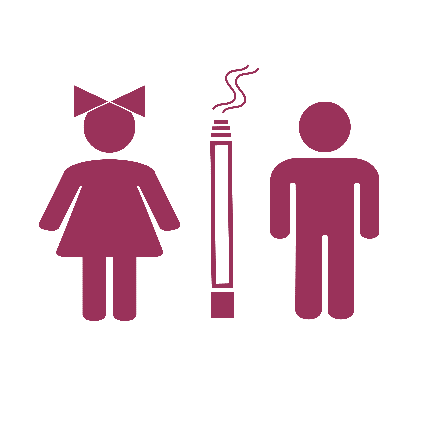
  Second-hand smoke (SHS) exposure costs 800,000 lives a year. Children in developing countries are worst affected as smoke-free laws are only partially implemented, and private homes and cars remain a key source of SHS exposure. Children Learning About Second-hand Smoking (CLASS-III) is an ongoing project of ARK Foundation in collaboration with University of York.
Read more
  • Published in Non-Communicable Disease, Our Work
No Comments
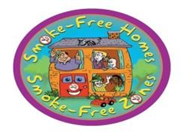
Children Learning About Second-hand Smoke (CLASS-II)

by
  Children Learning About Second-hand Smoke (CLASS-II) was a two-arm pilot cluster randomised controlled trial funded by the Medical Research Council, UK. The project primarily aimed to establish the effectiveness of a school-based intervention, ‘Smoke Free Homes’ , in reducing exposure of school children to second hand smoke. Its effect on frequency and severity of
Read more
  • Published in Non-Communicable Disease, Our Work
No Comments

Assessing the effectiveness of using Public-Private Partnerships to improve family planning services in Bangladesh

by
  Under this study, a public-private partnership (PPP) was developed to help private medical practitioners (PMPs) implement a referral strategy between themselves and family planning centres. We assessed whether the PPP model was effective in increasing the use of long-acting reversible contraceptive methods (LARCMs) and acceptable to both public and private healthcare providers.Our findings revealed
Read more
  • Published in Health Systems, Our Work
No Comments

A mHealth intervention (mTB-Tobacco) for smoking cessation in people with tuberculosis: a two-stage adaptive design, randomized trial (Quit 4 TB Trial)

by
Quit 4 TB Trial project aims to assess in people with TB who smoke daily and check the effectiveness and cost effectiveness of mTB-Tobacco in achieving continuous abstinence for at least six months and also assess the effectiveness and cost effectiveness of mTB-Tobacco in enhancing TB treatment adherence and improving clinical outcomes. We will conduct
Read more
  • Published in Communicable Disease, Our Work
No Comments

Utilisation and Effectiveness of Women Friendly Hospital Initiative: Problems, Prospects and Way Forward

by
The Women Friendly Hospital Initiative (WFHI) was launched in Bangladesh in 1998 with the goal of improving the quality of healthcare and addressing the needs of women during pregnancy, childbirth, and postpartum. The initiative aimed to reduce maternal mortality, fight against violence, and eliminate discrimination against women. It focuses on creating environment for women to
Read more
  • Published in Gender Equity and Social Inclusion, Our Work
No Comments

Understanding the ‘Overlapping’ Risks of Climate Change and Urbanisation

by
In the era of climate change, growing inequality, rapid urbanisation, humanity is dealing with a complex knot of apparently separate but actually deeply entangled risks. If not addressed the risk synchronisation can lead to critical crises and eventually will overwhelm the societal capacity to adapt. These overlapping risks (OR) have differential impact across gender. Decision
Read more
  • Published in Climate Change and Environment, Our Work

No Comments

Fiscal and Regulatory Mechanisms for Promoting Healthy Diets in Bangladesh

by
Diet-related non-communicable diseases (NCDs) continue to rise in Bangladesh, disproportionately affecting women, children, and the poor. The complex interaction of the fresh food supply chain, price drivers, competition from low-cost and low-nutrition products, and cultural influences affect access to consuming a healthy diet. This project aimed to review how fiscal and regulatory measures can be
Read more
  • Published in Nutrition, Our Work
No Comments

Community-led Responsive and Effective Urban Health Systems (CHORUS)

by
CHORUS is a Research Programme Consortium that brings together health researchers from South Asia, West Africa, and the UK. CHORUS works with communities, health professionals and city level decision makers to strengthen the urban health system, especially for the urban poor. ARK Foundation is currently implementing three projects under CHORUS. Project 1 aims to strengthen
Read more
  • Published in Featured, Health Systems, Our Work
No Comments
  • 1
  • 2
  • 3
  • 4
  • 5
  • 6

Recent Posts

  • Social determinants of health (SDOH) and its relationship with clinical and economic outcomes in people with type 2 diabetes in Bangladesh

    Social determinants of health and its relations...
  • Universal Health Coverage needs more than a bigger budget. It needs institutions and skills

    As the nation is heading towards its 13th natio...
  • Developing and evaluating an adapted behavioral activation intervention for people with depression and diabetes (DiaDeM)

    DiaDeM stands for “Developing and evaluating an...
  • ThinkSpace: Quarterly Research Digest

    ARK Foundation is pleased to launch ThinkSpace,...
  • CHORUS Annual Partners’ Meeting

    The CHORUS Partners’ Meeting officially commenc...
  • আসন্ন নির্বাচনে রাজনৈতিক দলগুলোর কাছে স্বাস্থ্যখাতে প্রত্যাশা

    আগামী ত্রয়োদশ জাতীয় সংসদ নির্বাচনকে সামনে রেখে ...
  • 𝐋𝐨𝐜𝐚𝐥 𝐑𝐞𝐚𝐥𝐢𝐭𝐢𝐞𝐬 𝐚𝐧𝐝 𝐇𝐞𝐚𝐥𝐭𝐡 𝐂𝐚𝐫𝐞 𝐂𝐡𝐨𝐢𝐜𝐞𝐬: 𝐂𝐨𝐦𝐦𝐮𝐧𝐢𝐭𝐲 𝐏𝐞𝐫𝐬𝐩𝐞𝐜𝐭𝐢𝐯𝐞𝐬 𝐟𝐨𝐫 𝐄𝐪𝐮𝐢𝐭𝐚𝐛𝐥𝐞 𝐔𝐫𝐛𝐚𝐧 𝐏𝐫𝐢𝐦𝐚𝐫𝐲 𝐇𝐞𝐚𝐥𝐭𝐡 𝐂𝐚𝐫𝐞 𝐢𝐧 𝐃𝐡𝐚𝐤𝐚, 𝐁𝐚𝐧𝐠𝐥𝐚𝐝𝐞𝐬𝐡

    Let’s lookback at the impactful contributions f...
  • Identifying barriers and facilitators for health risk behaviours among people with severe mental illness in Bangladesh and Pakistan: a qualitative study

    Read the full article here People with severe m...
  • আসন্ন নির্বাচনে রাজনৈতিক দলগুলোর কাছে স্বাস্থ্যখাতে প্রত্যাশা

    আসন্ন নির্বাচনে রাজনৈতিক দলগুলোর কাছে স্বাস্থ্য...
  • Engaging rural communities in Bangladesh to address antimicrobial resistance via the community dialogue approach: a protocol for a cluster-randomized controlled trial

    Click here to read the full article Introductio...
  • From Intervention to Impact: A Qualitative Process Evaluation of a NCD Intervention to Strengthen Urban Resilience in Urban Dhaka City

    Let’s lookback at the impactful contributions f...
  • An mHealth (Mobile Health) Intervention for Smoking Cessation in People With Tuberculosis: A Cluster Randomized Clinical Trial

    Find the full article here A new research artic...
  • Understanding Access to Primary Healthcare in Dhaka’s Urban Slums: A Qualitative Inquiry into Community Perceptions and Health Equity Challenges

    Find the PDF here or Read HTML version ARK Foun...
  • Bangladesh’s first national EQ-5D health value set unveiled

    ARK Foundation organized a dissemination event ...
  • Major Barriers on Universal Health Coverage in Bangladesh

    In 2020, while the government spent Tk 2,187 cr...
  • Non-communicable Disease Condition in Bangladesh

    Did you know that over 70% of deaths in Banglad...
  • Universal Health Coverage | Ensuring Equity in Every Health Decision

    𝐔𝐧𝐢𝐯𝐞𝐫𝐬𝐚𝐥 𝐇𝐞𝐚𝐥𝐭𝐡 𝐂𝐨𝐯𝐞𝐫𝐚𝐠𝐞 𝐃𝐚𝐲 𝟐𝟎𝟐𝟓 calls us to ...
  • Webinar: Who Gets Left Behind? Addressing Health Vulnerability and Inequity in Urban Contexts

    Thursday 11 December 2025  04.00 – 05.00 ...
  • AMR Situation in Bangladesh

    Only a week-long awareness campaign is not enou...
  • 𝐖𝐨𝐫𝐥𝐝 𝐇𝐞𝐚𝐫𝐭 𝐃𝐚𝐲 𝟐𝟎𝟐𝟓 — 𝐃𝐨𝐧’𝐭 𝐌𝐢𝐬𝐬 𝐚 𝐁𝐞𝐚𝐭

      Heart disease is one of the leading caus...

Empower Your Career with ARK Foundation

Discover opportunities to make a difference in health, education, gender equality, and environmental sustainability.

JOIN US

ARK Foundation is a non-government, non-political and not-for-profit organization dedicated to the socio-economic development of Bangladesh. Through evidence-based research, training and communications it provides sustainable solutions for health, education and social development.

ADDRESS

Suite A-1, C-3 & C-4, House # 06, Road # 109,
Gulshan-2, Dhaka, Bangladesh, 1212

Phone: +88 02 55069866

Email: info@arkfoundationbd.org

LOCATION

  • GET SOCIAL

© 2025. All rights reserved. ARK Foundation.

TOP