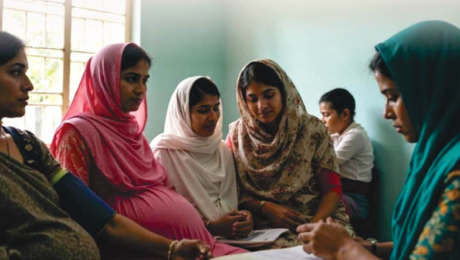

Mental disorders are a major contributor to the global disease burden, ranking among the top 10 causes of health loss. Individuals with Severe Mental Illness (SMI) (Schizophrenia, Schizoaffective disorder, Psychosis, Bipolar illness and Severe Depression with psychosis) are among the most vulnerable population groups facing health disparities, increased risk of physical multimorbidity, higher mortality, shorter life expectancy
- Published in Non-Communicable Disease, Our Work

No Comments
The ARK Foundation conducts on-demand research and training in the areas of health, education, and social development. The ARK Foundation’s mission is to ensure sustainable development through research-based solutions, training and promotion in the areas of health, nutrition, population, education, gender, environment and human resource development. In collaboration with the ARK Foundation, the University of
- Published in Non-Communicable Disease, Our Work
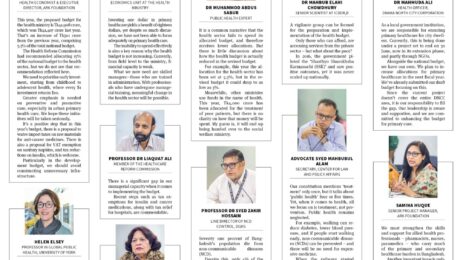
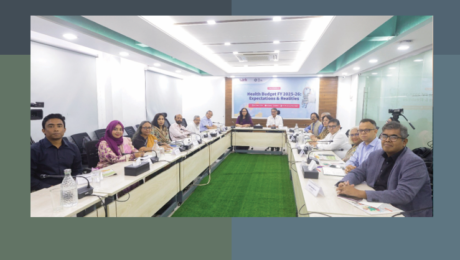
PDF Version The health sector is facing major budgetary challenges due to flawed preparation processes that fail to identify priorities, leading to insufficient fund allocation and poor utilization, experts said. They also said there is a lack of managerial efficiency, as well, in implementing health budget. these insights were shared at a roundtable discussion titled
- Published in Featured, News, News and Media
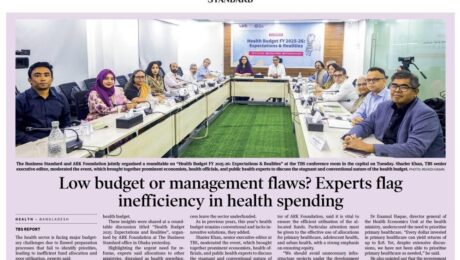
PDF Version Highlights: Flawed preparation blamed for failing to identify priorities Despite potential, primary healthcare underfunded Managerial inefficiency hampers fund utilisation NCDs underprioritised despite rising deaths Women, child health budget cut again Need skilled managers, better planning Private sector unregulated, inequitable care Budget usually slashed significantly in revisions The health sector is facing major budgetary
- Published in Event, Featured, News, News and Media

Chief Health Officer of DNCC, Brig. Gen. Imru-al-Qayes shares insights on the limitations of UPHCSDP
As the Urban Primary Health Care Services Delivery Project (UPHCSDP) nears its conclusion in 2025, significant challenges remain in ensuring healthcare for all. With 50% of Dhaka’s population still without adequate coverage, what’s next? Chief Health Officer of Dhaka North City Corporation, Brigadier General Imru-al-Qayes, shares critical insights on the limitations of UPHCSDP and the
- Published in News and Media, Video
Fahmida Farzana PDF Version Tobacco kills more than 8 million people each year. To make up these “lost consumers”, the industry goes after the youth as their next target. Today’s young people are the next generation of “lifelong customers”, and most tobacco users start smoking before they become adults. Over time, tobacco companies’ tactics to
- Published in Uncategorized
Due to the rapid increase in the urban population, public sector health services in urban settings are under strain. There are limited accessible and available health facilities with insufficient medicines and supplies and inadequate health workers with training appropriate to the changing disease burden in the public health system. Over time, these gaps in the
- Published in Policy Brief, Resources
The Community-led Responsive and Effective Urban Health System (CHORUS) is a research programme consortium that unites health researchers from Africa, South Asia, and the UK. It collaborates with communities, health professionals, and city-level decision-makers to develop and test strategies aimed at improving the health of the poorest urban residents. CHORUS and ARK Foundation hosted
The Community-led Responsive and Effective Urban Health System (CHORUS) is a Research Programme Consortium that brings together health researchers from Africa, South Asia, and the UK. CHORUS collaborates with communities, health professionals, and city-level decision makers to develop and test strategies for improving the health of the poorest urban residents. As part of its ongoing
By Abdullah M. Rafi (published in The Business Standard on 15 May, 2025) Bangladesh, one of the fastest-growing economies in the world according to the World Bank, has identified health as both a priority and a persistent challenge. Article 15(a) of the country’s constitution reflects this commitment by guaranteeing healthcare as a fundamental right for
- Published in Blog, News, News and Media