By Umme Salma Anee, Masroor Salauddin, Sadika Afrin, Faiaz Chowdhury, Nabila Binth Jahan, Deepa Barua, Rumana Huque, Helen Elsey Urban regions in Bangladesh are now more densely populated as a result of migration and industrialization. With a population rise of 3.26% from 2022 to 2023, Dhaka, the country’s largest metropolis that is growing day by
- Published in Blog
No Comments
A transgender named Sumaiya (pseudonym) became sick while collecting money for a long time under the scorching heat of summer. She went to buy medicine from a road side drug store. While buying medicine, she heard many witticisms saying, ‘You also get sick!’ the drug sellers generally compel the transgenders to leave quickly as the
- Published in Blog, News and Media
Safeguarding policies and practices in the global health research sector are inspired and influenced by different sources and entities. In most countries, organizations form their safeguarding policies as per the law of the respective country and relevant laws of the host/donor countries they work with. While safeguarding policies are not the same in all research organizations
- Published in Blog, News and Media
Have you ever wondered what would happen if no medicine were effective to treat illnesses, caused by bacteria, fungi, viruses, and parasites? I am sure you have never thought about it. But it could happen because of a process known as “Antimicrobial Resistance or AMR”. We will discuss about AMR later. First, let us familiarize
- Published in Blog, News and Media
Abdur Rahim (pseudonym, aged 65+) lazily passes his days at his shabby little home in Duwaripara slum. Being a retired day-laborer, he is now financially dependent on his wife’s and daughter’s income, both of whom work as part-time maids for several families in Pallabi, Dhaka. Rahim, sitting at a tea-stall with a bunch of his
- Published in Blog, News and Media
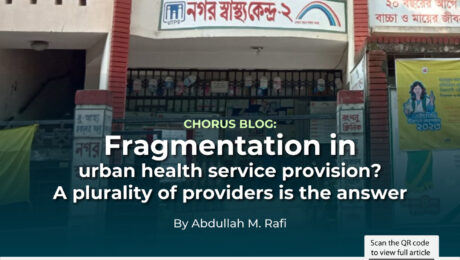
Improved quality and access to healthcare services are essential for a country’s development. Private sectors like NGOs, for-profit and non-profit organizations have significantly contributed to health by financing and managing healthcare services in different ways. Private sector, similar to other countries, brings technology, innovation, financing, and most importantly, additional health workforce – areas that public
- Published in Blog, News and Media
Abdur Rahim (67) lazily passes his days at his shabby little home in Duwaripara slum. Being a retired day-laborer, he is now financially dependent on his wife’s and daughter’s income, both of whom work as part-time maids for several families in Pallabi, Dhaka. Rahim, sitting at a teastall with a bunch of his contemporaries, expresses
- Published in Blog, News and Media
By Tahmid Hasan In Bangladesh, NCDs are estimated to account for 67% of all deaths. In low and middle-income countries, urbanization has been identified as one of the crucial underlying reasons for the increasing trends of NCDs. Bangladesh has also been experiencing rapid urbanization for the past two decades. The urban population of Bangladesh has increased
- Published in Blog, News and Media
By Rumana Huque The World Health Organisation (WHO) strongly promotes the primary care principles enshrined in the 1978 Alma Ata declaration which emphasises equity, inter-sectoral collaboration, access to essential drugs, appropriate health technology, and comprehensive care. A Primary Health Care (PHC) approach from a services delivery perspective can be characterised as primary care: the continuum
- Published in Blog, News and Media
- 1
- 2