
• Privacy Policy
  • Terms & Condition
  • Archive

ARK Foundation

  • Home
  • About
    • About Organization
    • Our Partners
    • Global Networks & Leadership
  • Our Team
    • Advisor
    • Executive Director
    • Research and Development
    • Research Uptake & Communications
    • Programme and Training
    • Finance and Administration
    • Data and Field Management
  • Our Work
    • Communicable Disease
    • Non-communicable Disease
    • Multimorbidity
    • Antimicrobial Resistance
    • Maternal, Newborn, Child and Reproductive Health
    • Nutrition
    • Health Systems
    • Climate Change and Environment
    • Gender, Equity and Social Inclusion
  • News & Media
    • Event
    • News
    • Blog
    • Video
    • Newsletter
  • Resources
    • Journal Article
    • Report
    • Working Paper
    • Project Brief
    • Policy Brief
    • Conference Proceedings
    • Infographics
    • Posters
  • Career
  • Contact

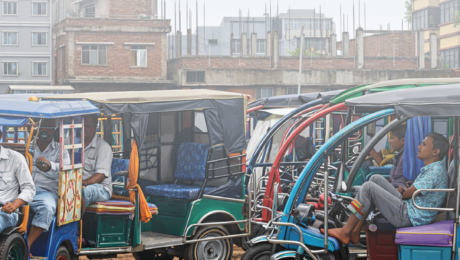
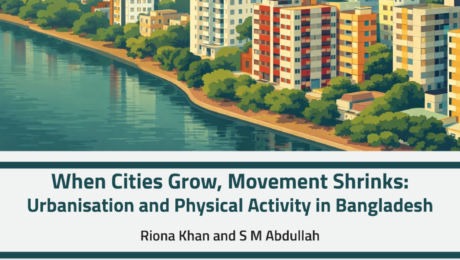
When Cities Grow, Movement Shrinks: Urbanisation and Physical Activity in Bangladesh

by
Find the PDF here Written by Riona Khan and S M Abdullah Imagine a young garment worker in Dhaka. S/he wakes up early, boards a crowded bus, sits for long hours at a sewing machine, returns home exhausted, and spends the evening indoors. The day is full for them, but physically, they have barely moved. Conversely, imagine
Read more
  • Published in Blog, Featured, News and Media
No Comments

The Karlson-Holm-Breen (KHB) Method: Why Logistic Mediation Results Might Be Misleading?

by
Read pdf here Written by Ibrahim Hasan and S M Abdullah A simple story with a built-in complicated problem Assume being a health researcher, you are studying health inequality. Particularly, you are interested to know the non-communicable disease (NCD) outcome status due to educational attainment exposure. Your preliminary logistic regression results showed that people with
Read more
  • Published in Blog, News and Media
No Comments

Fragmentation in urban health service provision? A plurality of providers is the answer

by
Read it here or download PDF  Abdullah Rafi, from ARK Foundation in Bangladesh, discusses how the perceived fragmentation of urban healthcare in low- and middle-income countries (LMICs) should be viewed as a symptom of unmanaged plurality rather than a system failure. The majority of the world’s population is now urbanised, with 55% of humanity currently
Read more
  • Published in Blog, Featured, News and Media
No Comments

Precision at Scale: Managing 3,559 Survey Clusters in the World’s Largest Refugee Settlement

by
Find the pdf version here or read it here By  Zunayed Al Azdi When we began planning the Routine EPI Coverage Evaluation Survey in the Rohingya camps of Cox’s Bazar, the numbers were daunting. Thirty-three camps. 3,559 clusters. More than 25,000 households. Over 100 field personnel operating in one of the most densely populated refugee settlements
Read more
  • Published in Blog, News and Media
No Comments

Why does it matter? Childhood obesity among school going children in Urban Bangladesh: Potential Way Forward

by
Read the PDF here Written by Badruddin Saify For decades, the image of a chubby child in Bangladesh has served as a profound source of pride, probably a visual rebuttal to the historical specter of famine and chronic undernutrition in the country. In our collective cultural memory, physical weight is frequently synonymized with wealth and
Read more
  • Published in Blog, News and Media
No Comments

Where antibiotics enter the city: what we are learning with drug sellers in Mirpur

by
Written by: Asiful Haidar Chowdhury (Senior Research Fellow) Late afternoon in Mirpur, the pharmacy counter is busy. Someone wants “something strong” for a cough that has not gone away. Another person asks for an antibiotic by name, confidently, like it’s a household staple. The drug seller has seconds to respond. Refuse, and risk losing the customer
Read more
  • Published in Blog, News and Media
No Comments

Closing the Gap: How Urban Primary Health Care Can Achieve Health Equity

by
Written by: Marhouba Khan Asfi (Research Assistant) Bangladesh is urbanizing rapidly. More people are living in cities every year, and that growth increases demand for services of every kind, including health care. City corporations and municipalities are expected to deliver public services in urban areas, but they face real limits in staffing, funding, space, coordination, and
Read more
  • Published in Blog, News and Media
No Comments

Listening Between Appointments, Streets, and Silence

by
Written by: Nabila Binth Jahan (Junior Research Associate) Fieldwork rarely begins with a recorder switched on. More often, it begins with waiting, outside clinics, in narrow lanes, beside busy roads, or under the sun, hoping someone will spare a few minutes to talk. In the urban slum areas of Dhaka where CHORUS Projects 1 and 2
Read more
  • Published in Blog, News and Media
No Comments

When Public Spaces Aren’t Truly Public: Making Physical Activity Safer for Women and Girls in Urban Bangladesh

by
Written by: Umme Salma Anee (Senior Research Assistant) A park can be five minutes away and still feel unreachable. For many women and adolescent girls in urban Bangladesh, the barrier is not a lack of interest in being active. It is what surrounds the activity itself: the walk to the space, the fear of harassment, the
Read more
  • Published in Blog, News and Media
No Comments

Addressing the Knowledge Deficit: Health Education and Public Awareness in Bangladesh

by
Written by: Kazi Fatin Sami (Research Assistant) Whenever someone goes through a difficult moment in life, a familiar regret tends to appear: “I wish someone had warned me earlier,” or “If only I had known about this risk in advance.” The same pattern holds true for health. For many diseases and health-related conditions, warning signs are
Read more
  • Published in Blog, News and Media
No Comments
  • 1
  • 2
  • 3
  • 4

Recent Posts

  • mHealth intervention (mTB-Tobacco) for smoking cessation in people with drug-sensitive pulmonary tuberculosis in Bangladesh and Pakistan: protocol for an adaptive design, cluster randomised controlled trial (Quit4TB)

    Read the article here or download the PDF versi...
  • Gender differences in mental health help-seeking behaviour in Bangladesh: findings from a cross-sectional online survey

    Read the article here or download PDF version A...
  • Designing a strategic purchasing framework for urban primary healthcare services in Bangladesh: a protocol for a mixed-method study with a discrete choice experiment

    Find the article here or download PDF version A...
  • Expansion of low-price cigarette market and its implications for cigarette tax revenue: Evidence from Bangladesh

    Read the article here or download the PDF versi...
  • Engaging rural communities in Bangladesh to address antimicrobial resistance via the community dialogue approach: a protocol for a cluster-randomized controlled trial

    Read the article here or download the PDF versi...
  • Associations between sociodemographic characteristics and knowledge about antibiotics and antibiotic resistance and usage of antibiotics from a One Health perspective in rural Bangladesh: a descriptive cross-sectional study

    Find the article here or download the PDF versi...
  • Perceived barriers and the price inflating effects of informal payments in fresh food retailing in urban Bangladesh

    Find it here or download the PDF version  ...
  • Facilitators and challenges to access fresh fruits and vegetables in a low to middle income group in Bangladesh: Consumers’ perception

    Find it here or download the PDF version Abstra...
  • How prepared are urban primary care facilities to manage hypertension and type 2 diabetes in Dhaka, Bangladesh? A cross-sectional descriptive study of government urban dispensaries and NGO clinics

    Find the article here or download the PDF versi...
  • Tobacco cessation intervention for individuals with severe mental illness in Bangladesh, India, and Pakistan: protocol for a multi-country feasibility randomised controlled trial (SCIMITAR-SA)

    Read the article here or download the PDF versi...
  • When Cities Grow, Movement Shrinks: Urbanisation and Physical Activity in Bangladesh

    Find the PDF here Written by Riona Khan and S M...
  • Patient and provider perspectives of pluralistic primary care services in urban Bangladesh: a qualitative study

    Read it here or find PDF here Abstract Backgrou...
  • The Karlson-Holm-Breen (KHB) Method: Why Logistic Mediation Results Might Be Misleading?

    Read pdf here Written by Ibrahim Hasan and S M ...
  • South Asian Coalition of Policy and Evidence for Equitable food systems (SCOPE)

    The South Asian Coalition of Policy and Evidenc...
  • Fragmentation in urban health service provision? A plurality of providers is the answer

    Read it here or download PDF  Abdullah Rafi, fr...
  • International Women’s Day 2026

      When women give knowledge, care, and lea...
  • In-country public-private partnerships hold the key to promoting inclusiveness in Dutch trade and international cooperation agenda

    Read the PDF here...
  • COVID-19 and Tobacco

    Read the PDF here  ...
  • Taxation on Sugar-Sweetened Beverages (SSBs) in Bangladesh: What should we do?

    Read the PDF here...
  • Public Private Partnership in Improving Access and Utilization of Health Care Services: Scopes, Opportunities and Challenges

    Find the PDF here  ...

Empower Your Career with ARK Foundation

Discover opportunities to make a difference in health, education, gender equality, and environmental sustainability.

JOIN US

ARK Foundation is a non-government, non-political and not-for-profit organization dedicated to the socio-economic development of Bangladesh. Through evidence-based research, training and communications it provides sustainable solutions for health, education and social development.

ADDRESS

Suite A-1, C-3 & C-4, House # 06, Road # 109,
Gulshan-2, Dhaka, Bangladesh, 1212

Phone: +88 02 55069866

Email: info@arkfoundationbd.org

LOCATION

  • GET SOCIAL

© 2025. All rights reserved. ARK Foundation.

TOP